- Amy Howden-Chapman2014
- Ana Iti2020
- Andrew McLeod2007
- Andy Leleisi’uao2010
- Anoushka Akel2024
- Ava Seymour2009
- Ayesha Green2022
- Ben Cauchi2011
- Benjamin Work2024
- Bepen Bhana2016
- Campbell Patterson2015
- Conor Clarke2026
- Cora-Allan Lafaiki Twiss2021
- Dan Arps2014
- Daniel Malone2014
- Emily Karaka2021
- Emma Fitts2018
- Eve Armstrong2009
- Fiona Pardington2013
- Gavin Hipkins2007
- George Watson2024
- Glen Hayward2011
- Imogen Taylor2017
- James Robinson2007
- Jess Johnson2019
- Jim Speers2010
- Juanita McLauchlan2025
- Judy Millar2006
- Kathy Barry2012
- Linda Va'aelua2026
- Lisa Reihana2009
- Liyen Chong2012
- Louie Zalk-Neale2026
- Louise Menzies2016
- Luise Fong2008
- Madison Kelly2024
- Martin Basher2010
- Matthew Galloway2025
- Michael Stevenson2023
- Moniek Schrijer2021
- NELL2023
- Neke Moa2023
- Nicola Farquhar2018
- Oliver Perkins2017
- Owen Connors2023
- Regan Gentry2012
- Richard Frater2020
- Richard Lewer2008
- Rohan Wealleans2008
- Rowan Panther2025
- Ruth Buchanan2013
- Sarah Hudson2025
- Sarah Smuts-Kennedy2016
- Sefton Rani2025
- Sorawit Songsataya2018
- Steve Carr2020
- Suji Park2015
- Syyoung Kim2026
- Tanu Gago2022
- Taro Shinoda2017
- Tiffany Singh2013
- Tim Wagg2019
- Wayne Youle2019
- Zac Langdon-Pole2022
- Zena Elliott2026
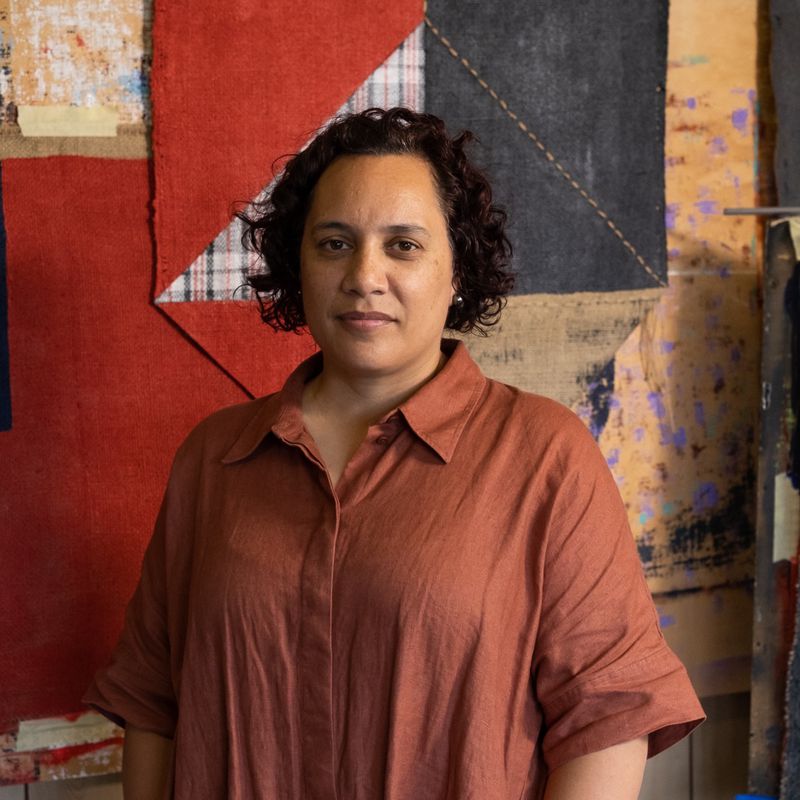
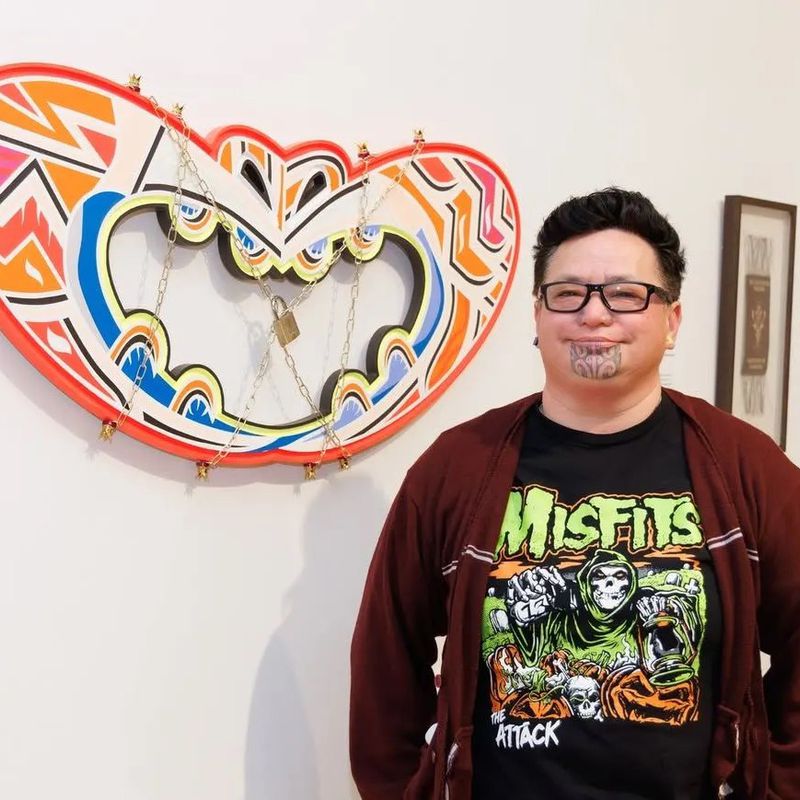
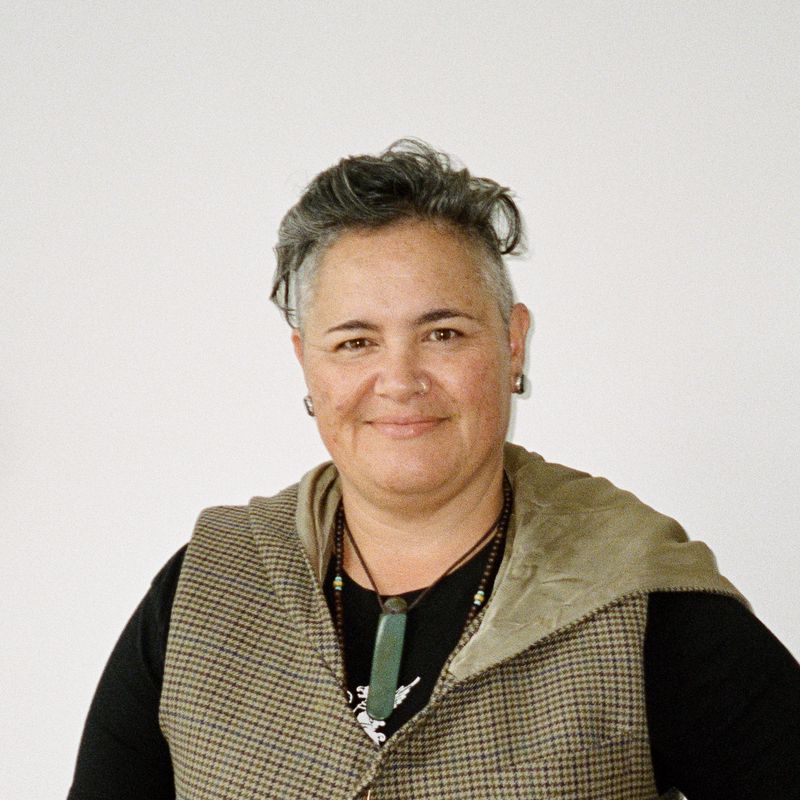


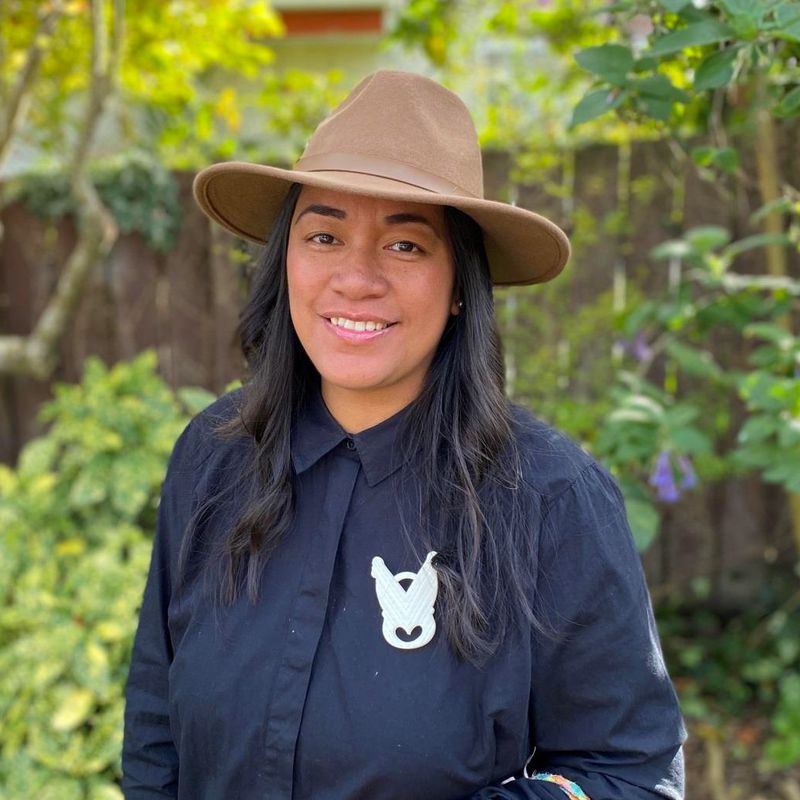


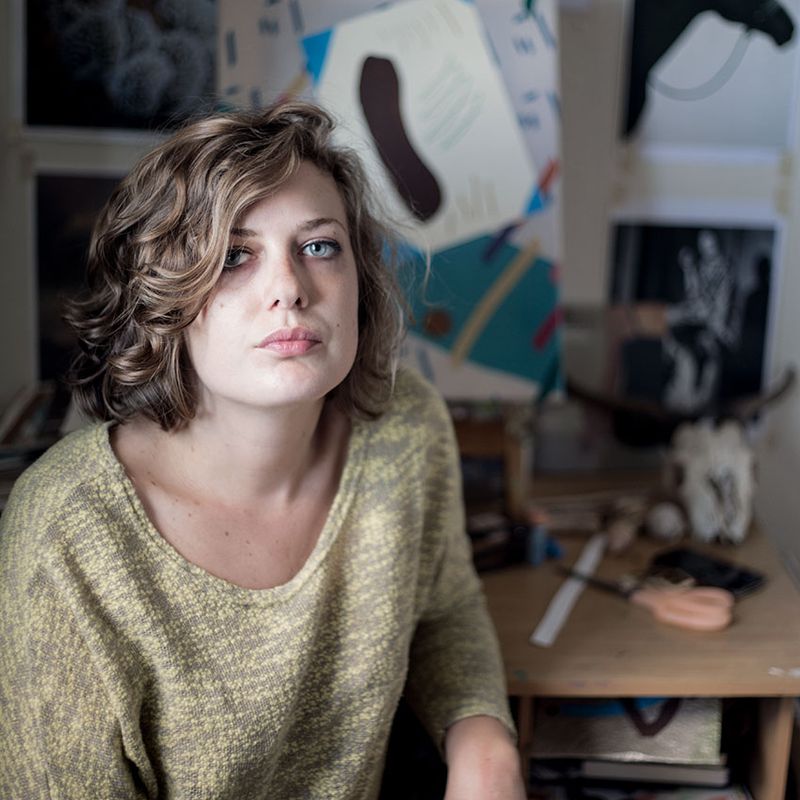
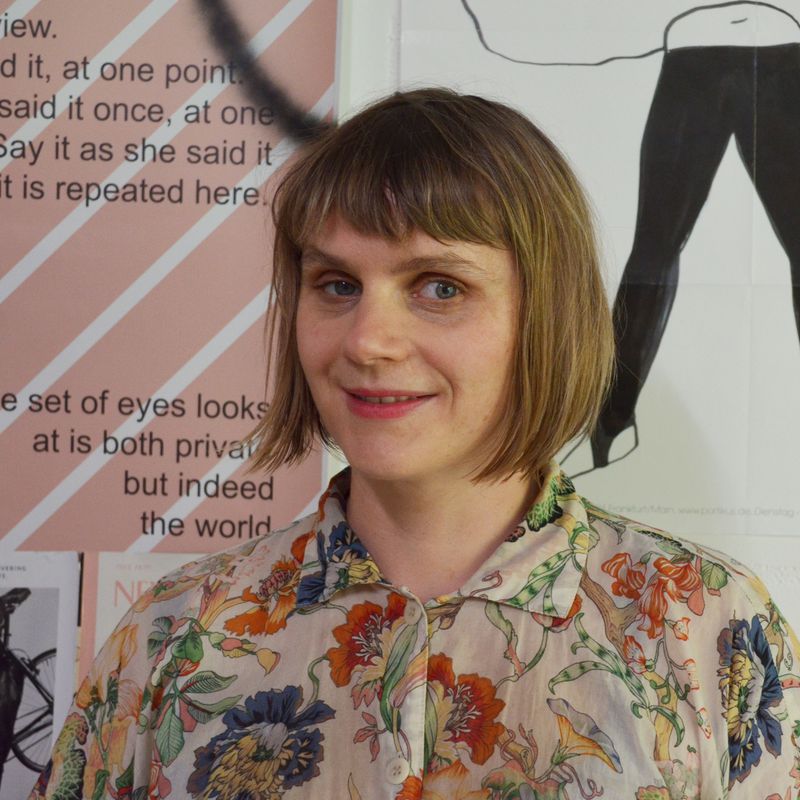
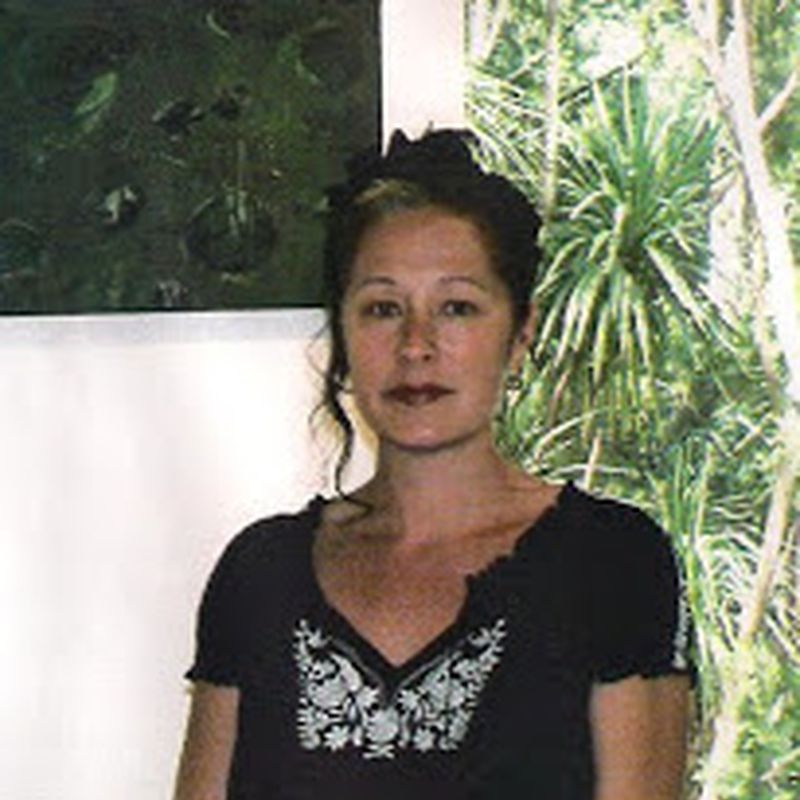
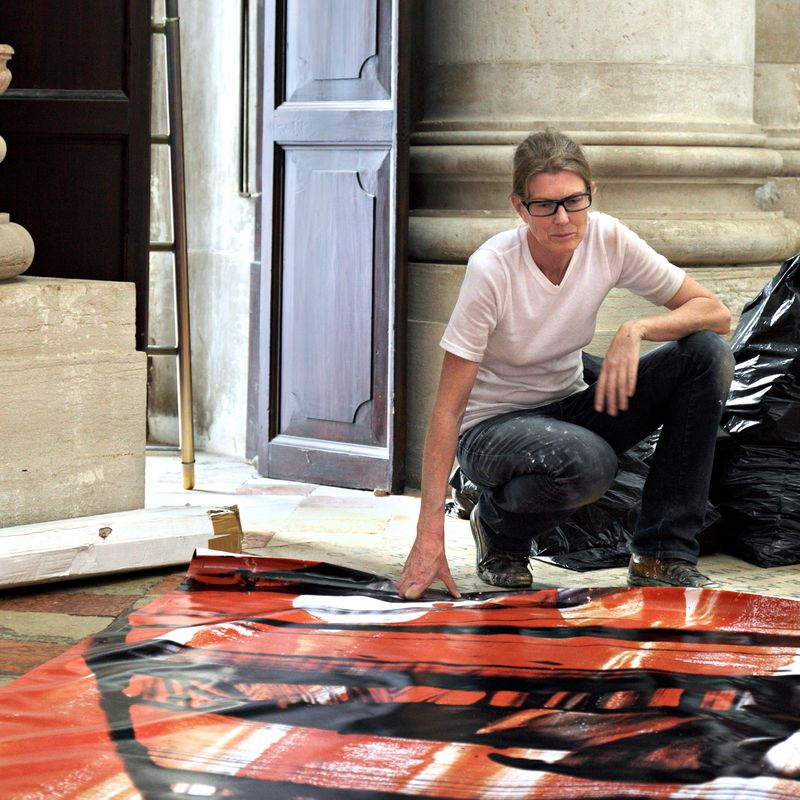
Sarah Hudson
YEAR OF RESIDENCY
January - November 2025
Naoshima Artist in Residence 2025
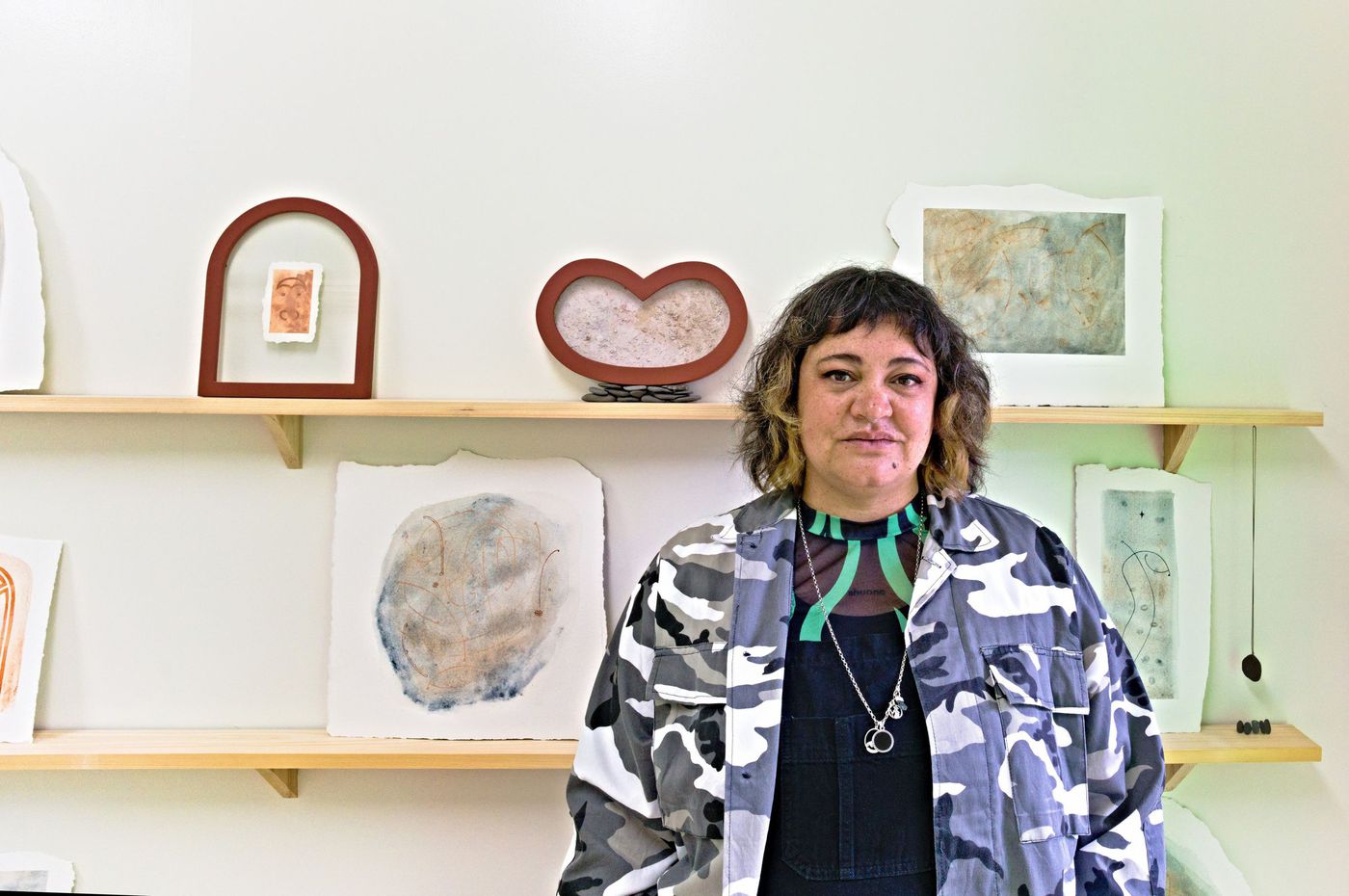
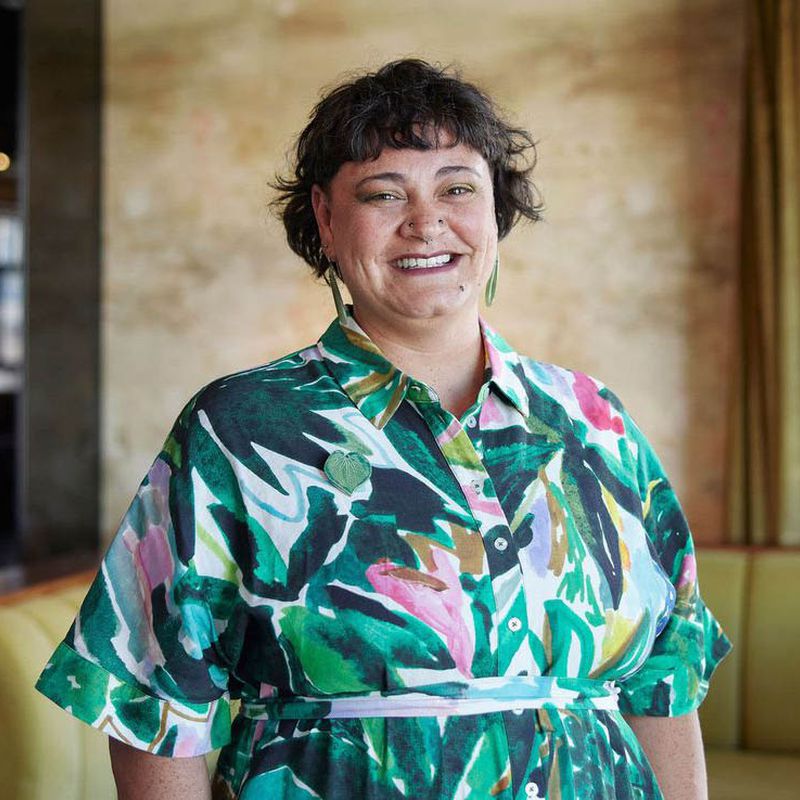
In March 2023, Sarah Hudson (Ngāti Awa, Ngāti Pūkeko and Ngāi Tūhoe) was invited to undertake the inaugural Naoshima Artist Residency, a new month-long residency opportunity for a New Zealand artist in Japan, to coincide with an exhibition at the Setouchi Triennale in 2025.
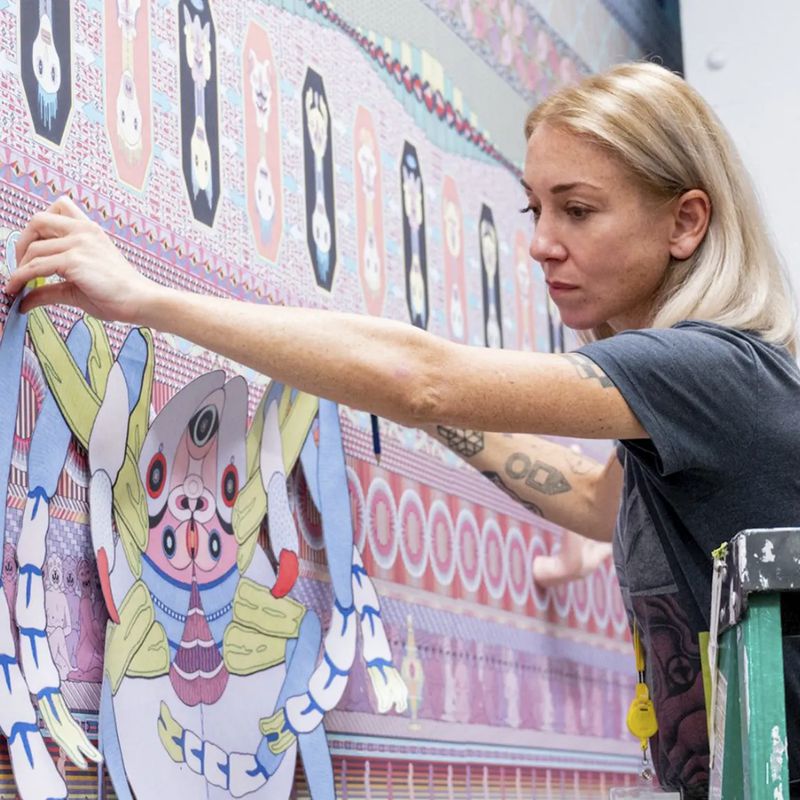
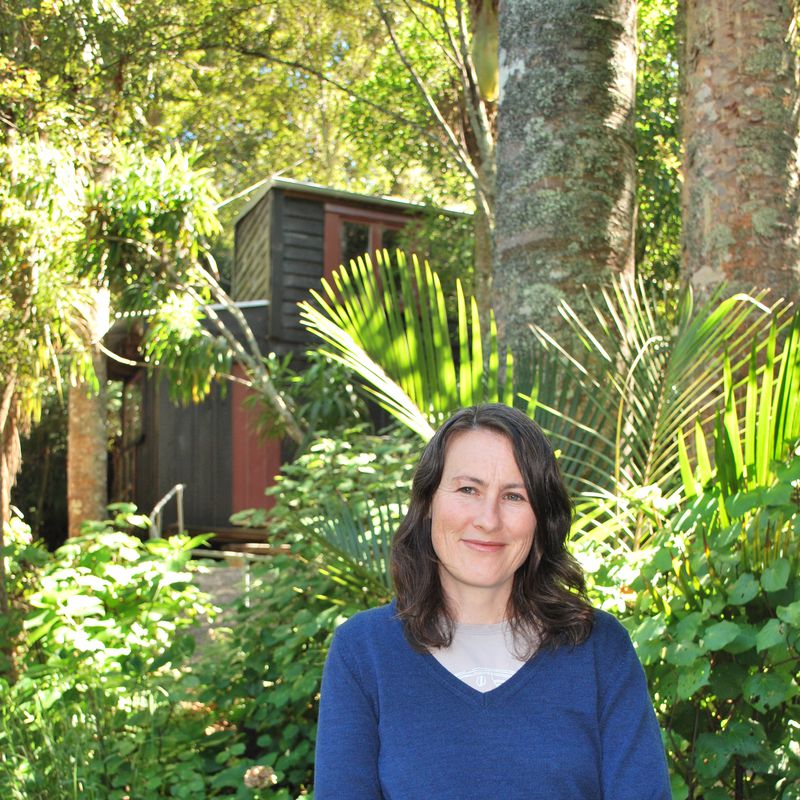
Sarah Hudson, an artist based in Whakatāne, has exhibited widely in her individual practice and with the highly-acclaimed Mataaho Collective. Hudson’s solo practice explores tino rangatiritanga (sovereignty), play, whenua (land), reciprocity, and relationships through painting, performance, video and sculpture. Completing her Masters in Fine Arts with distinction through Massey University in Wellington in 2010, Hudson has exhibited nationally and internationally with Mata Aho. She is also a founding member of the Kauae Raro Research Collective - an organisation dedicated to the promotion and retention of Māori paint-making technologies.
Sarah Hudson, The Stones Remember and I Listen, 2025, detail. Photographer: Sarah Hudson
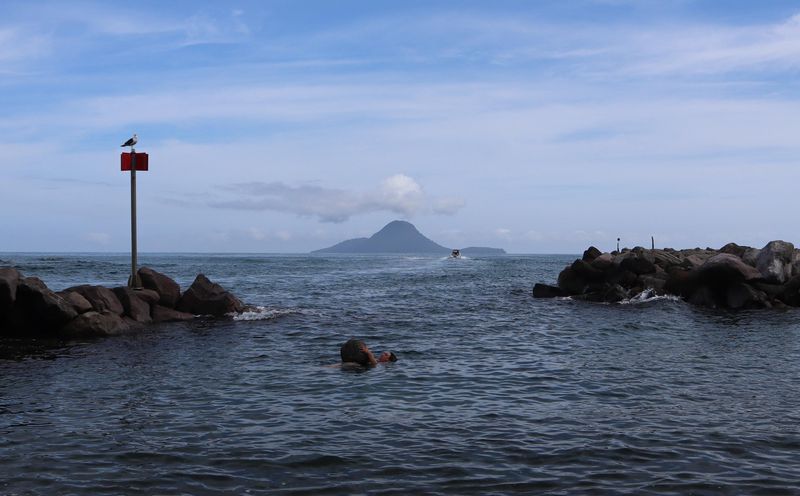
Sarah Hudson, Belonging, 2025, Video still, HD Video, colour, sound, 10min , Videography by Nicole Hunt
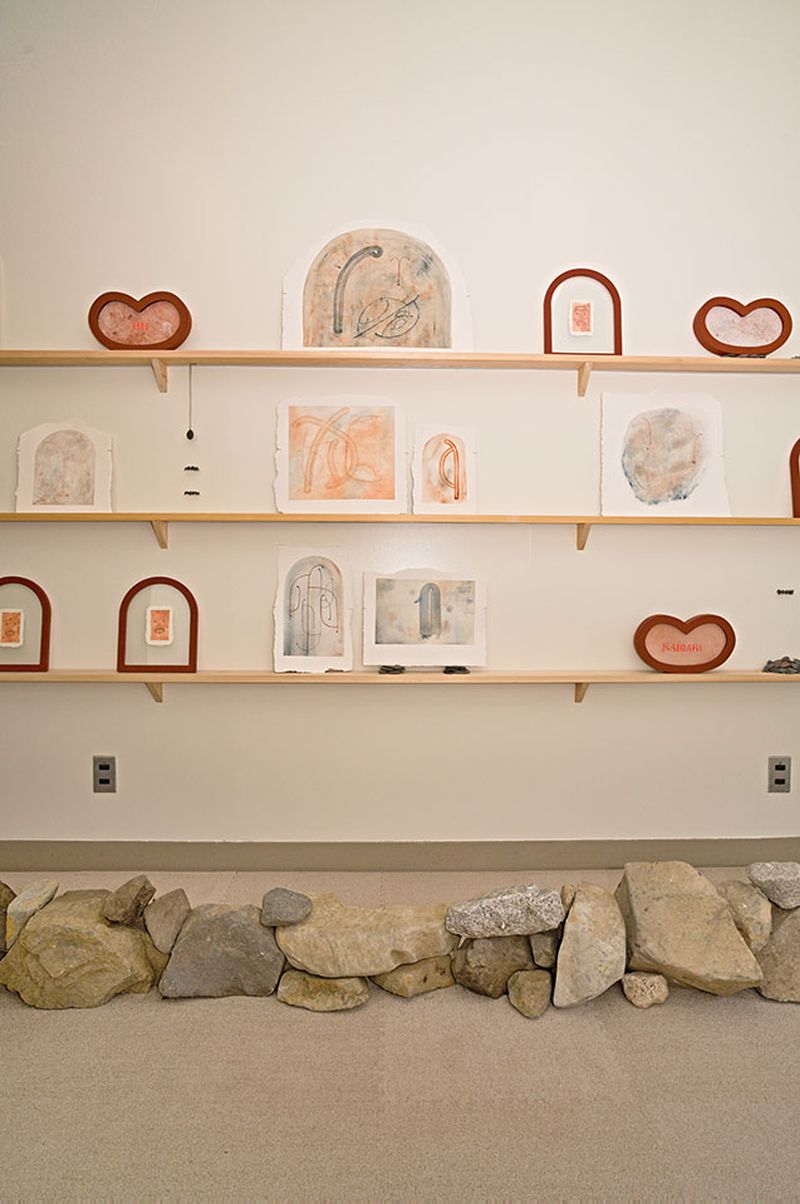
Sarah Hudson, The Stones Remember and I Listen, 2025, installation view. Photographer: Sanuki Street
I have a lovely library of books in my shed, many of which were gifts from writers, friends, old managers who are also friends, acquaintances and crushes. Surrounded by books of poetry, prose, fiction and non-fiction, it feels ironic that I struggle to find words with which to start an essay, article, response, celebration of the work of Sarah Hudson. Because I want them to be the right words, to be of the right weight to hang around my neck or to tumble out of my mouth as I read them aloud. Words that might sit alongside the decades of Landfall sitting on one bookshelf, the prestigious publication that luminaries have written for, or nestle amongst the beauty of poets I’ve long admired, or seamlessly sit within scenes from the shelf of plays that I’ve carried with me from flat to flat to storage to the house that became home. Those were the right words, where are mine?
Sarah messages me from the Seto Island Sea where the installation of her work for the Setouchi Triennial is complete in the decommissioned school site she’s being exhibited in. “Oh, it looks so good, like a library of good stories!”, I reply in response to the image of three horizontal shelves and a trail of rocks in its foreground. On these shelves, are individual paintings, some framed and some not but each has a story to tell. Sarah has told me about these stories, painted with whenua from Moutohorā, and indigo gifted from Shikoku.
At home in my shed, I choose a couple of books to prompt some thinking, they’re both inscribed on the inside with my aunty’s name in her familiar scrawl, ‘J.M.Cunningham’. These I inherited after she died: Maori Proverbs and Sayings by Murdoch Riley, and Nga Kokako Huataratara: The Notched Plumes of the Kokako by Arapera Hineira Kaa Blank. Among the book of whakataukī, I find a section dedicated to Wairaka, among the most well-known of Ngāti Awa tīpuna and whose actions to save those aboard te waka Mātaatua gave its name to the township Sarah has lived in for most of her life, Whakatāne. The area where te waka Mātaatua was pulled ashore by Wairaka is in the same place that Sarah’s video works Belonging were shot, with Moutohorā resolutely in the background. I struggle to find the words to describe the emotion in knowing both the kōrero of Wairaka and how well-known it is, how cool and trippy it is that we can walk the whenua she walked and view the landing place of the waka, and conversely how this is not the same for Moutohorā. A close yet distant island, always in view. Moutohorā is an island synonymous with the identity of Whakatāne and yet about whom the history is much less accessible and known.
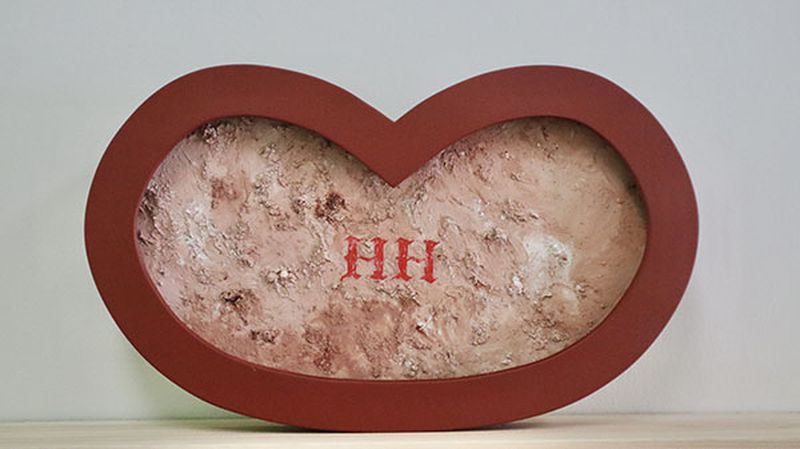
To learn, I take a painting from Sarah’s library. Framed in wood painted a deep red, it is the shape of a mouth you might see on a wheku, or a pou. If you look again it looks like a smiling mouth or a flattened loveheart. Within two of these framed paintings are letters, one spells out RAMARI and the other contains the initials HH. Sarah tells me of how one of her whanaunga, Ramari Stewart, lived on the island for many years as part of a longitudinal study into the local dolphin population. This study took place in the 1970s and was one of the first of its kind as a long-term study. More importantly, Ramari was one of the first uri of Ngāti Awa to have lived on Moutohorā in recent times, her hapū of Ngāti Hokopu having had their access to the island interrupted.
I choose another book, this one an oral history from my Koro Jim who was advising on a clam restoration project in Foxton, one of many things I never knew he was part of. As oral histories are wont to do, the kōrero ranges all over the place, reaching back in time to his childhood and forward with brief mentions of his mokopuna. Every story comes from somewhere else, doesn’t it? For Māori, it comes from the land and the sea, our tīpuna and our gods – carved, corporeal, imagined. At one point Koro Jim and the interviewer touch upon history, Koro’s response being, “And history kills us eh.” There is no question mark, it is a full stop. Further on, they discuss the protection of the taiao, and the assumed nature of arguing with the Crown for the right to rectify the harm done to the whenua. Here he adds, “I’ll argue it out in a Court anyway.” I imagine it said in his straightforward and nonplussed manner, after all this is what we’re used to. I imagine a line between the two quoted kōrero: the fight and the death.
The initials HH are those of Sarah’s father who lobbied for many years for Ngāti Awa to have access to the island, and for the island to be returned to the iwi. HH never set foot on Moutohorā, but his story is painted in whenua from his island. The paintings featuring these names are from a series titled The stones remember, and I listen. Among these are tīpuna whose features have been pulled from memory, at least that’s how I see them, emerging from the page, or submerging into the inky blue of the indigo watercolours. Memories, histories, kōrero that are present yet foggy. The reality of our whānau kōrero residing in archives, as HH’s mahi to have Moutohorā returned does, is an uneasy realisation that the archive is not a space of neutrality, that our kōrero is not stored unencumbered. Instead, metadata will be attached that catalogues and categorises the hard work our whānau have done to the point where they could be a passing mention. A whole person carrying a whole history of a whole island is a mere mention.
However, Moutohorā is not a whole island. Sarah has shared with me how the motu has been dynamited before, and that boulders from the island reside at the Whakatāne river mouth. For most Ngāti Awa, touching these rocks and looking at Moutohorā is the closest they will ever get to visiting the island. There are many more tragic stories about this site in Whakatāne but I’m loathe for them to become a paragraph in a text, a list of bullet points or a crash course in history. Every single aggression on the whenua deserves its own hearing. It is enough to hear an island has been dynamited, it is enough to learn a people have been denied access to their whenua. These are the histories we know and inherit and pass on, and remember.
So, I come to Arapera Blank’s poetry. Born and raised in Rangitukia, she spent much of her adult life in Tāmaki Makaurau and the aforementioned collection ends with ‘Rangitukia Reminiscences – Soul Place’ and is an ode to her tūrangawaewae. Down and along each stanza, Arapera remembers her birthplace, from the hills covered in native trees to the homes of her whānau: here a school house, there a historic pā, at each corner the town is marked with her memories. This is a snapshot into a period that is often nostalgically referred to as ‘simpler times’. But it isn’t the simplicity that is so resonant in this poem, it is the closeness with the land upon which their township is built and thrives that feels so familiar and yet so far away. It is easy to imagine what that upbringing was like though it doesn’t reflect my own, in these imaginings of someone else’s memories there is such joy and such hope for another way of living, a tīpuna way of living. This is so propulsive that I can see why HH kept trying, and why Koro Jim gave his time to so many committees and court cases. Arapera ends her poem with:
Thus we are inheritors
of interwoven dreams,
whose paua-shimmering music ever
echoes on the wind.
Sometimes our dreams are nightmares by another name, the dream being that we want the simple times of access to whenua and the reality being that it is severed. Here I return to Belonging and Sarah’s grasping, knowing hands crawling their way along the rocky shore. With her body buffered by insistent water, she holds on, elsewhere she is kept afloat by another rock which bobs along the water, defying the gravity that would sink it. Staying afloat is survival, and to do so our bodies instinctually and quickly adapt to keep our heads above water. There are well-known metaphors sprinkled throughout these sentences and mai i te ao Māori, the most well-known would be ‘he toka tū moana’. This whakataukī is often translated to refer to someone who is able to endure tides of challenge, that those can wash over them and the person will remain steadfast. But with Belonging, a new meaning emerges: the rock wants to be there, it has learned how to stay, or maybe the rock was there first? In my mind this is the resilience of Sarah’s hapū of Ngāti Hokopu who remain despite their access to Moutohorā being interrupted or toxic waste being dumped in their takiwā. They remain despite many significant toka being detonated so the river mouth can be widened for rich people’s boats to moor in front of their marae.
Recently I spent some time in Tāmaki Makaurau in the suburb Te Hau Kapua, known as Devonport. In my time there, I stayed on a maunga called Takarunga and from the top of this maunga I looked at what remained of Takararo and tried but failed to find what remained of Takamaiwaho, these latter two maunga having been quarried to oblivion over the course of 80 years. When the quarry shut, the quarry leftovers were turned into lovely stonewalls that line the neighbourhood, or they were made into roads or berms. Before I learned this, I’d spent many days walking Te Hau Kapua and marvelling at its beauty not knowing that these were the exploded remains of a maunga. Near one of the suburb’s beaches is also a nondescript carpark which, as it turns out, is the site of a settlement that is comparable in age to the pā at Wairau Bar. Learning this history made it hard for me to see Te Hau Kapua the same again, I was furious that this history was allowed to be invisibilised. In this fury I felt the words about history killing us because I know that these are not the only quarries that have eaten maunga away.
Also in Sarah’s library is In my teeth, the DNA of cliffs, the taste of old stories, sculpted mouthpieces and adornments made from Megijima rocks. Each component was hand selected by Sarah in what she has termed a ‘tactile archive’. This term is a delightful oxymoron in that archives, at least those which I earlier critiqued, are usually unable to be handled or are mediated through the wearing of gloves. This work is in reference to the mnemonic practice that saw our people placing something on their tongue, a pebble for example, to aid in the memorialisation of whakapapa or kōrero tuku iho. With taste, I think of German philosopher Friedrich Nietzsche, whose work drew connection between food and memory. In her book of personal essays, and inspired by the work of Nietzsche, archivist Flora Feltham sought to recover memories from a traumatic period of her teenagerhood by eating the food she was eating at the time. This exercise uncovered more of what her and her brother didn’t remember: how they paid for food, who did the shopping, what their day-to-day life looked like. This returns me to the way in which the archive memorialises lives by capturing the big events and accomplishments people partake in while erasing the quotidian how, why and who they did it for.
Who did HH do this work for? What compelled him to do it? As I learn more from Sarah’s library, a mystery emerges. This isn’t a mystery that requires a monocle or even a tidy ending. In my teeth, the DNA of cliffs, the taste of old stories also makes reference to the stone walls that Sarah discovered in Megijima and knows to exist on Moutohorā, it is enough for this mystery to consider that when these walls were built, none of those stonemasons were to know that an artist from the town named by Wairaka would make a connection between them. These stone walls appear toothlike to Sarah, teeth that she refers to as ‘visible whakapapa’ as they are our bones on display. Bones on display, like a library of kōrero that the reader may select a book from but only those who have been granted access by Sarah will know how to read.