- Amy Howden-Chapman2014
- Ana Iti2020
- Andrew McLeod2007
- Andy Leleisi’uao2010
- Anoushka Akel2024
- Ava Seymour2009
- Ayesha Green2022
- Ben Cauchi2011
- Benjamin Work2024
- Bepen Bhana2016
- Campbell Patterson2015
- Conor Clarke2026
- Cora-Allan Lafaiki Twiss2021
- Dan Arps2014
- Daniel Malone2014
- Emily Karaka2021
- Emma Fitts2018
- Eve Armstrong2009
- Fiona Pardington2013
- Gavin Hipkins2007
- George Watson2024
- Glen Hayward2011
- Imogen Taylor2017
- James Robinson2007
- Jess Johnson2019
- Jim Speers2010
- Juanita McLauchlan2025
- Judy Millar2006
- Kathy Barry2012
- Linda Va'aelua2026
- Lisa Reihana2009
- Liyen Chong2012
- Louie Zalk-Neale2026
- Louise Menzies2016
- Luise Fong2008
- Madison Kelly2024
- Martin Basher2010
- Matthew Galloway2025
- Michael Stevenson2023
- Moniek Schrijer2021
- NELL2023
- Neke Moa2023
- Nicola Farquhar2018
- Oliver Perkins2017
- Owen Connors2023
- Regan Gentry2012
- Richard Frater2020
- Richard Lewer2008
- Rohan Wealleans2008
- Rowan Panther2025
- Ruth Buchanan2013
- Sarah Hudson2025
- Sarah Smuts-Kennedy2016
- Sefton Rani2025
- Sorawit Songsataya2018
- Steve Carr2020
- Suji Park2015
- Syyoung Kim2026
- Tanu Gago2022
- Taro Shinoda2017
- Tiffany Singh2013
- Tim Wagg2019
- Wayne Youle2019
- Zac Langdon-Pole2022
- Zena Elliott2026
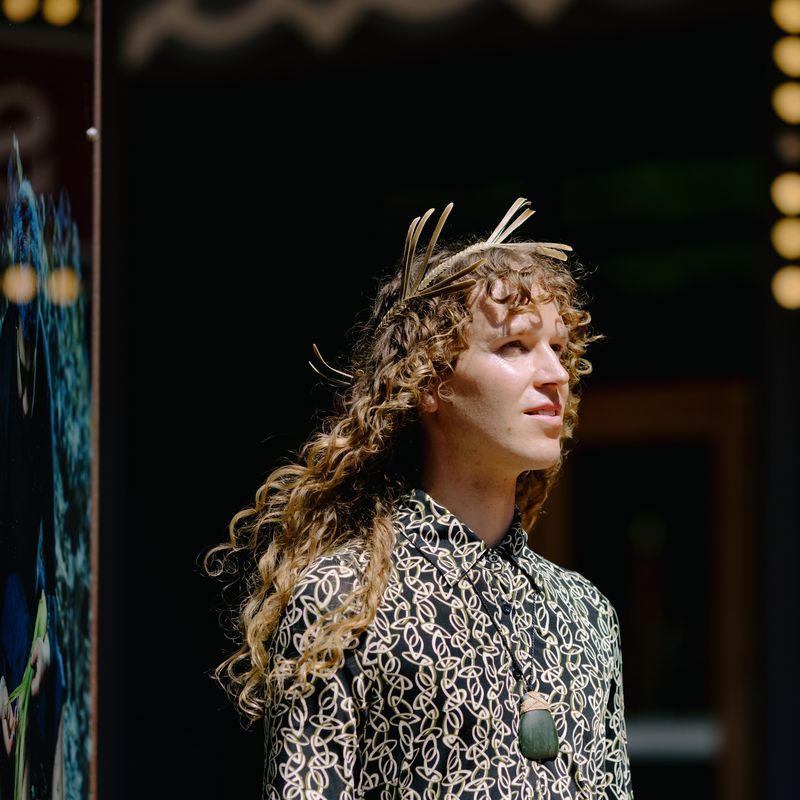
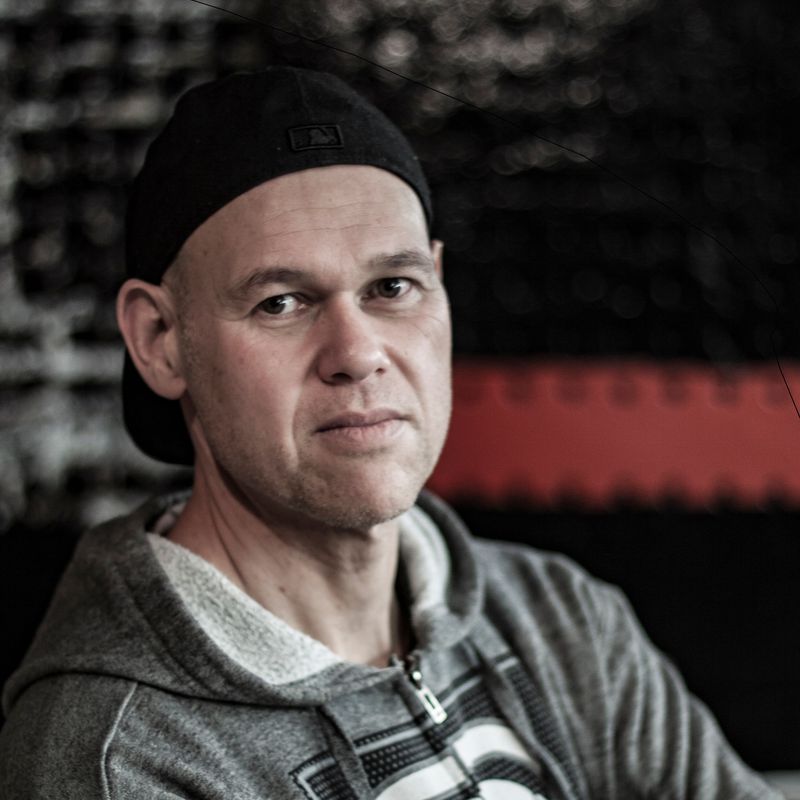
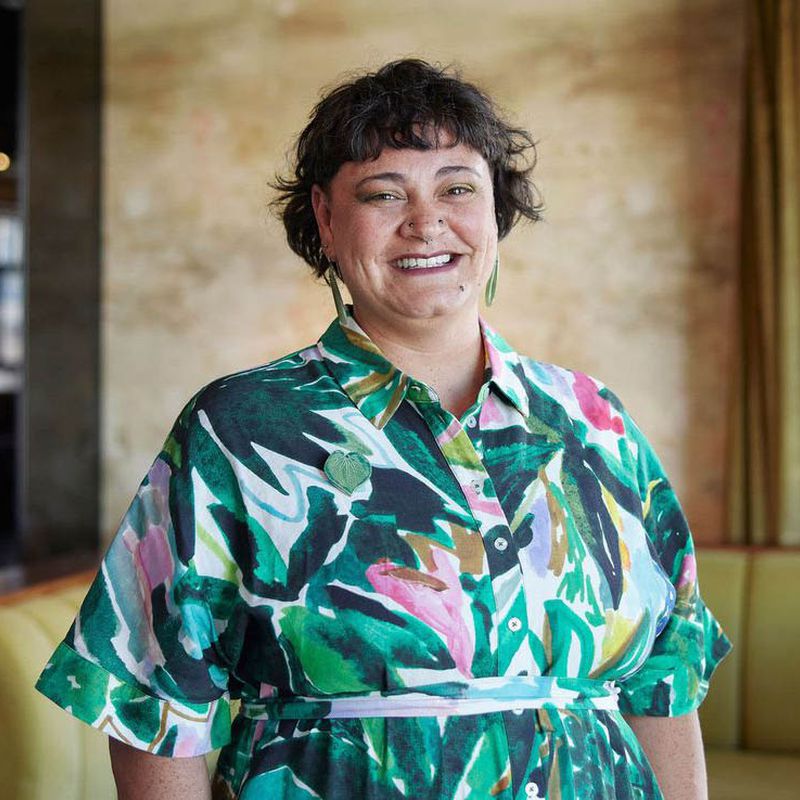
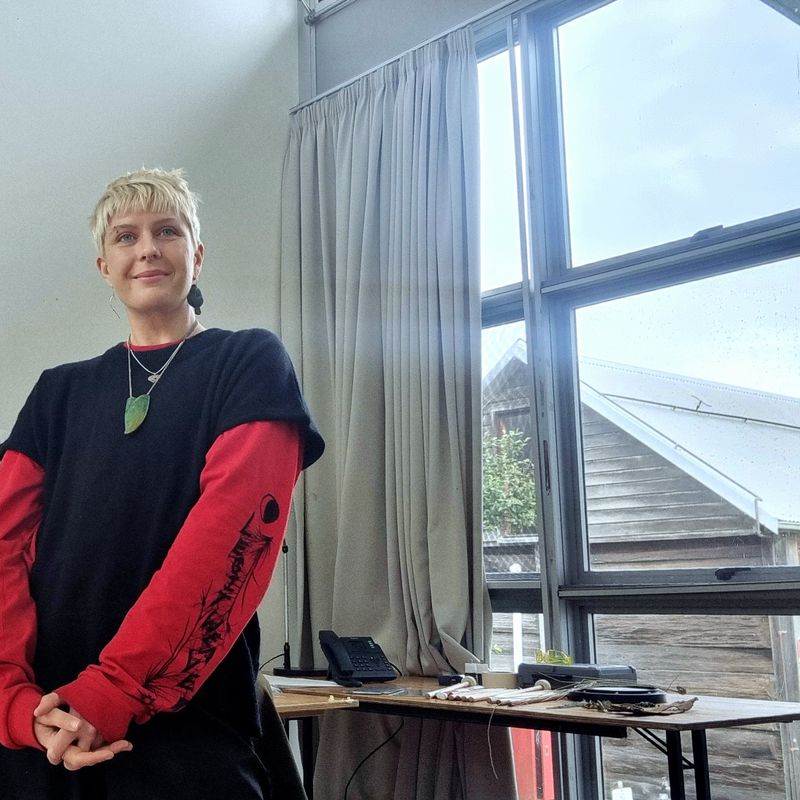
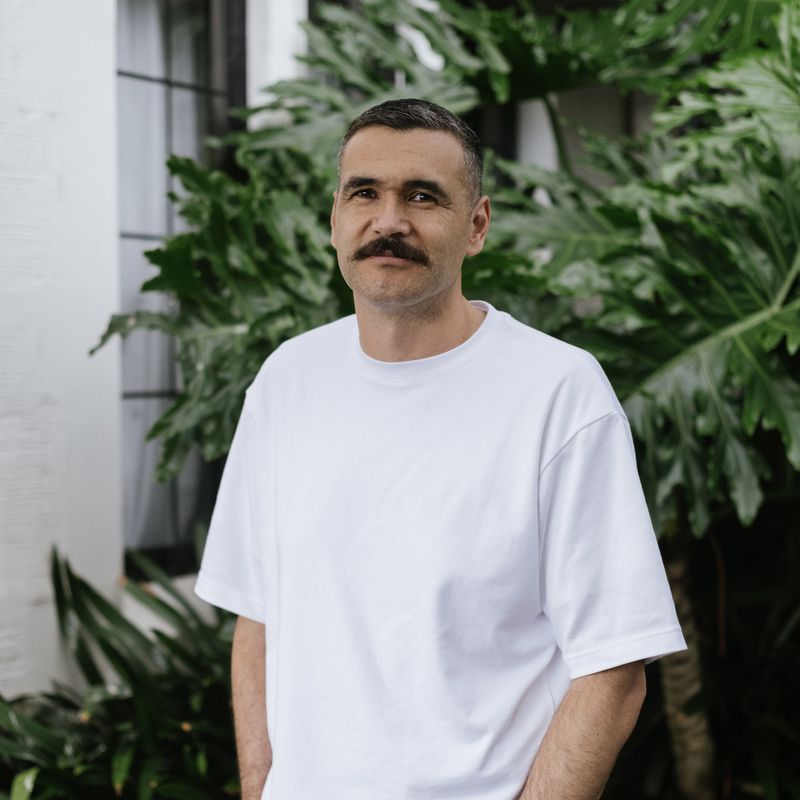
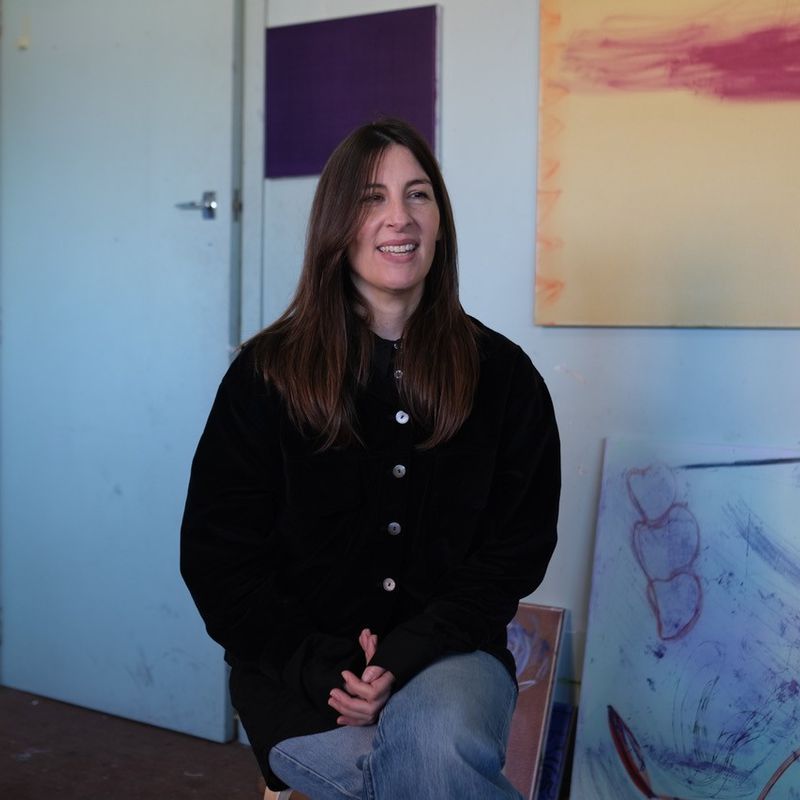
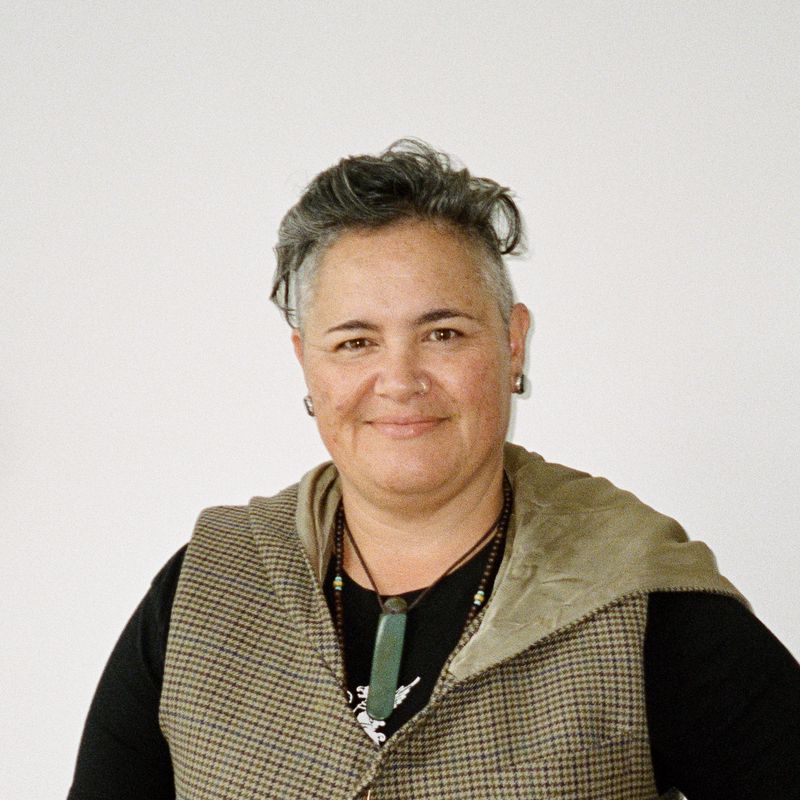
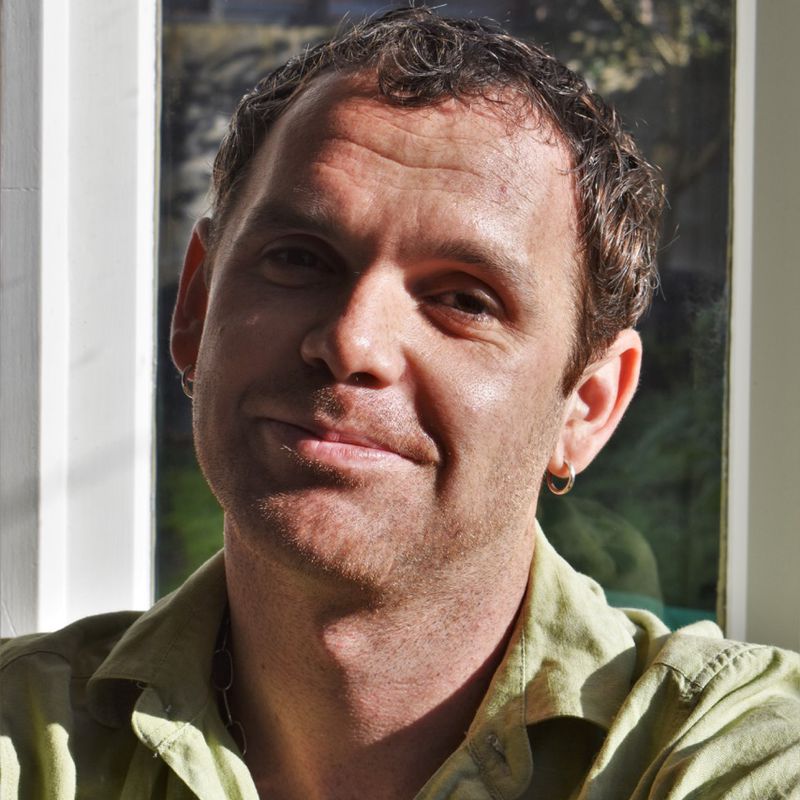
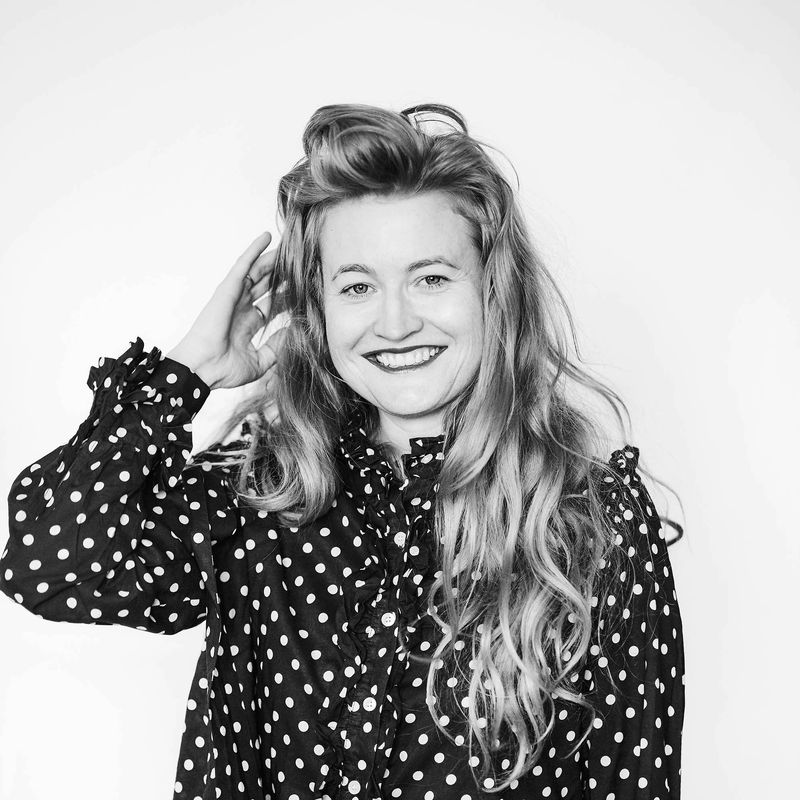
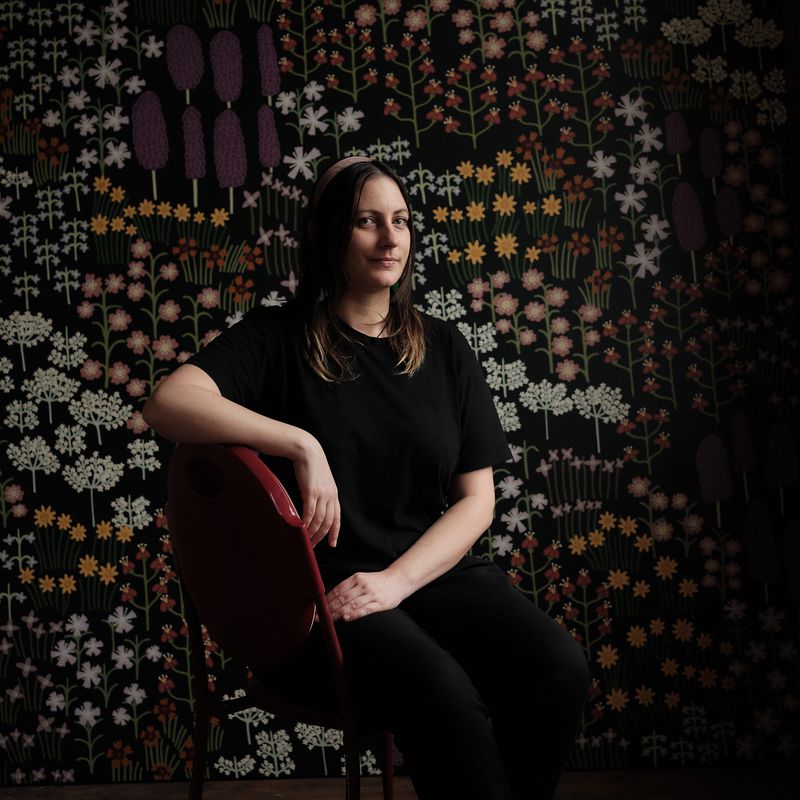
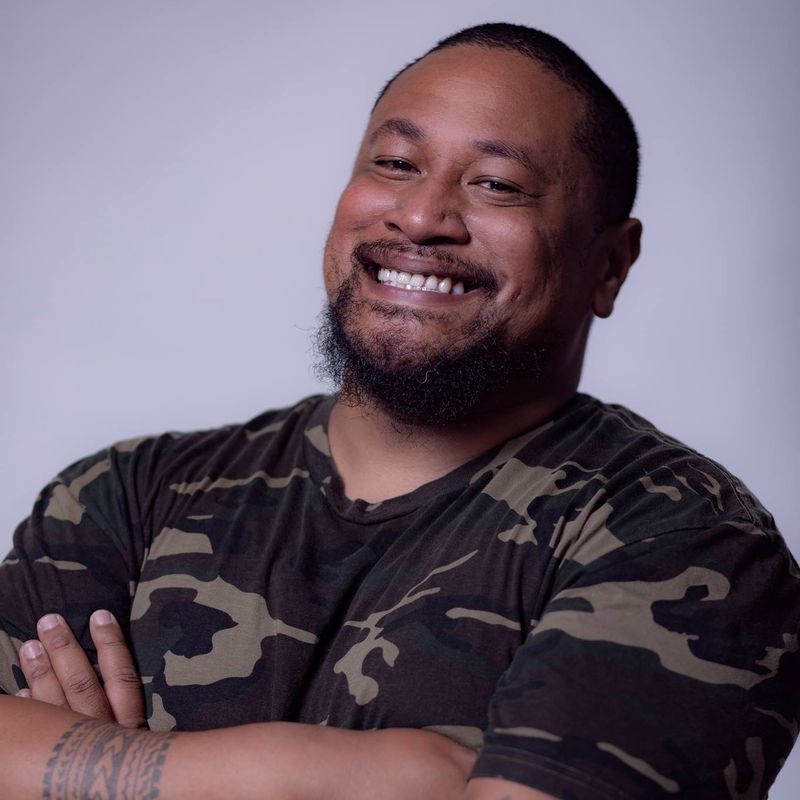
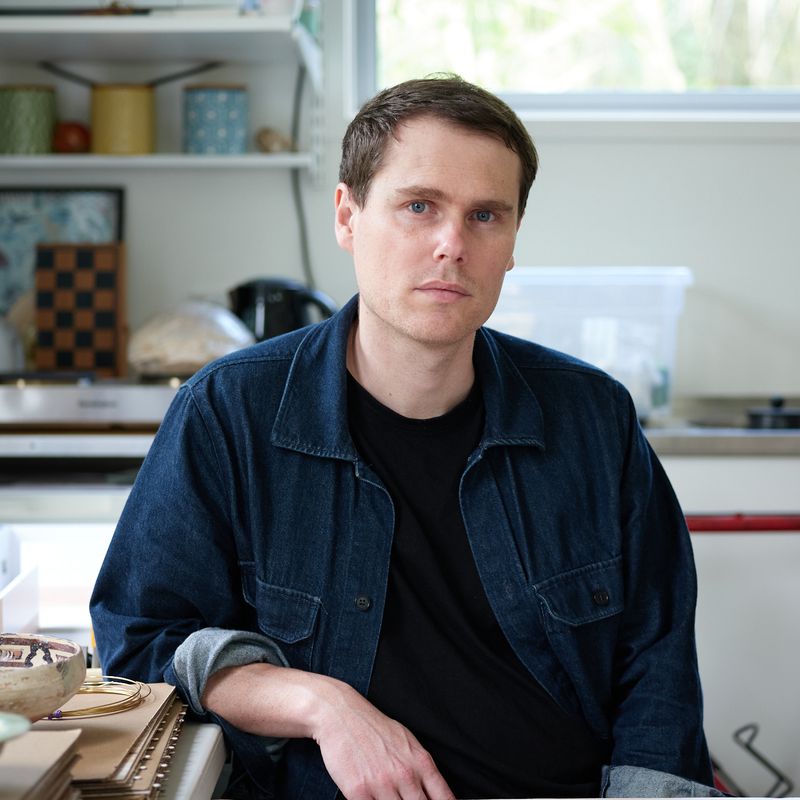
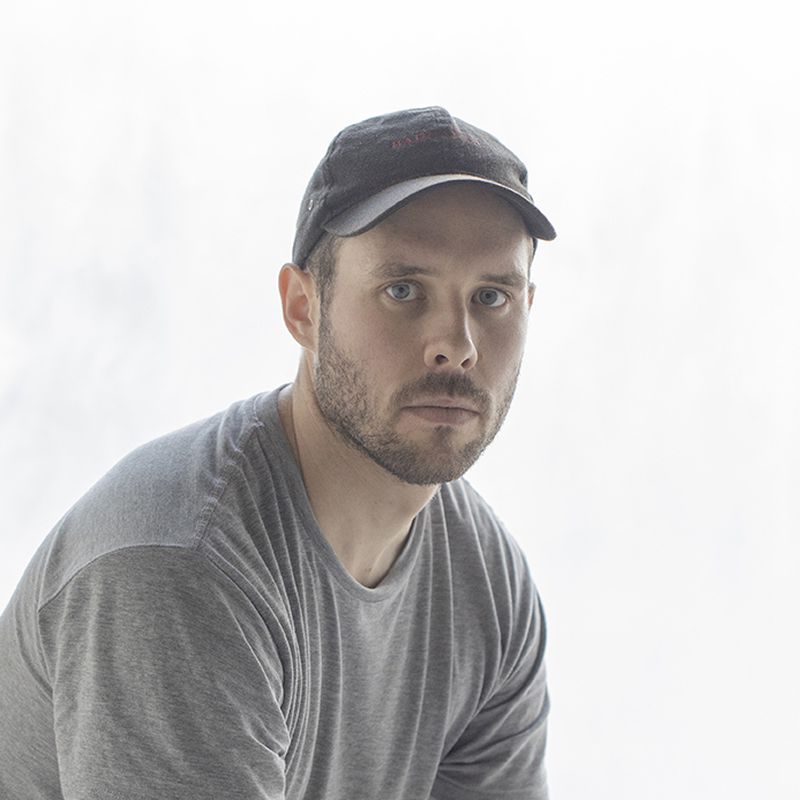
Madison Kelly
YEAR OF RESIDENCY
September - September 2024
McCahon House x Bundanon Exchange Artist 2024
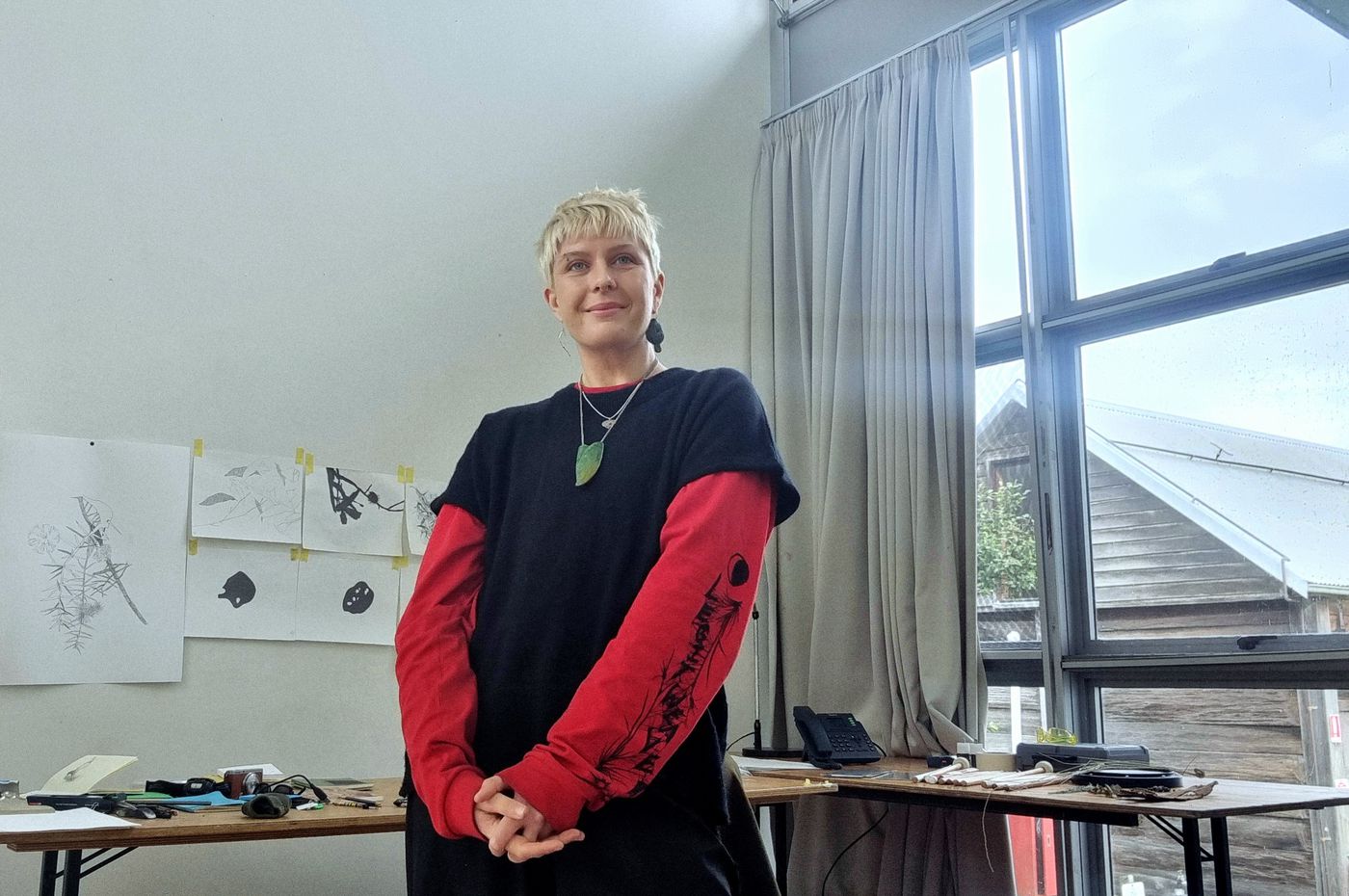
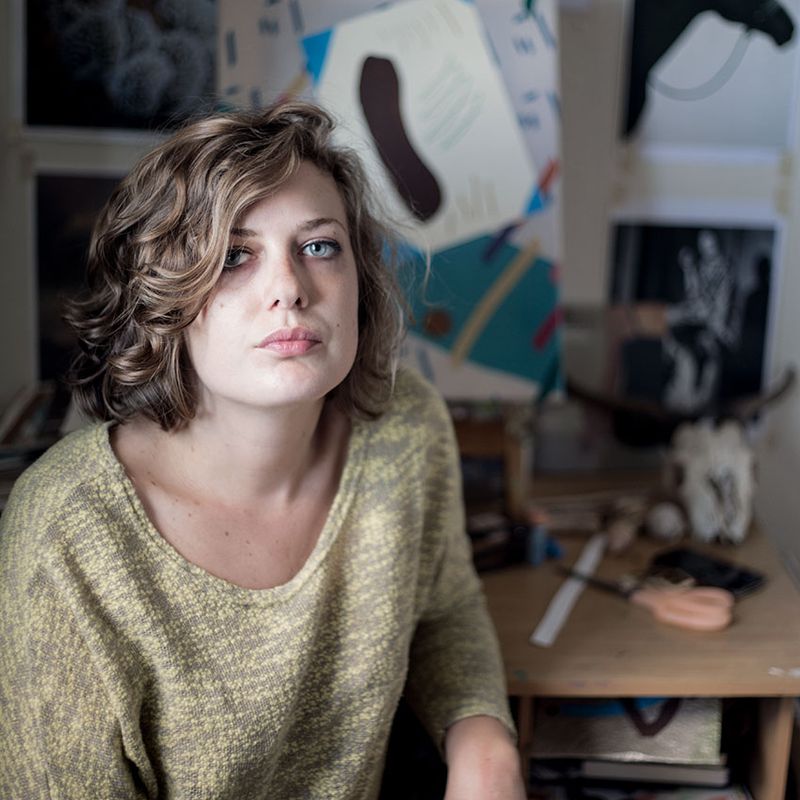
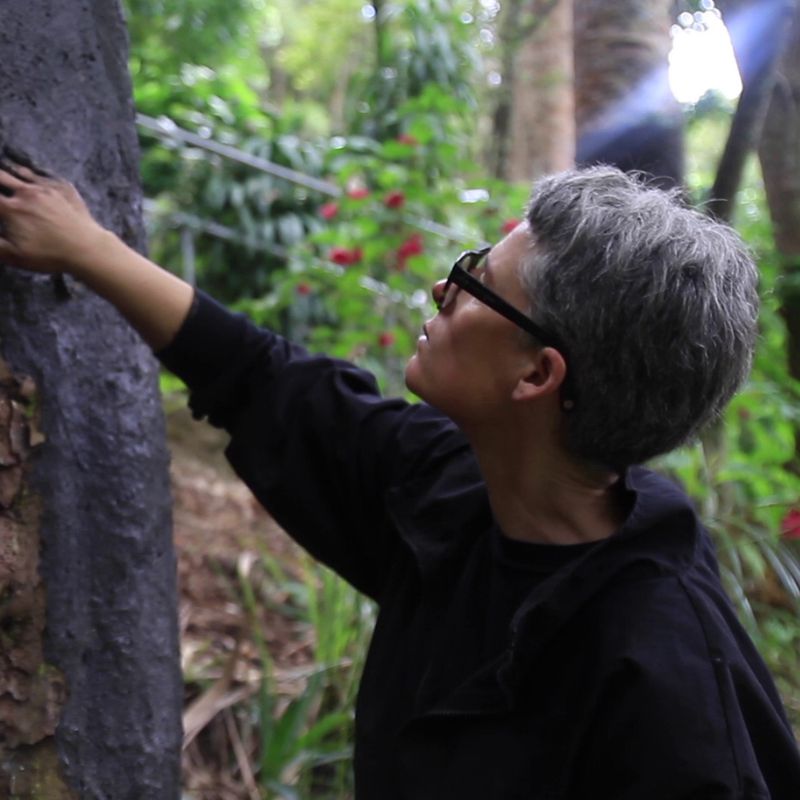
Madison Kelly (Kāi Tahu, Kāti Mamoe, Pākehā, b.1994) undertook the inaugural residency at Bundanon in August 2024.
Madison says “My first priority with the residency was to experience the very new territory of undertaking any research internationally - as manuhiri in someone else’s whenua. In a broader sense, I was excited to encounter the pōhatu/rocks over at Bundanon, to draw, listen, and play in their space as part of an ongoing research enquiry into percussion, mark making, and deep time whakapapa...I attended cultural burns and learnt more about the incredible cycles of indigenous conservation practices.”
Madison graduated from the Dunedin School of Art in 2017, with a BVA (Hons First Class) in drawing. Grounded in Kāitahutaka, observation and sensory experience, their Ōtepoti based practice explores the potentials of field recording, drawing, and percussion as embodied entry points for learning and sharing multispecies whakapapa.
Alongside their art practice Kelly is a percussionist, and lead kaiārahi/guide at Te Korowai o Mihiwaka, Orokonui Ecosanctuary (Waitati, Otago). Recent shows include Huikaau: Where Currents Meet (Dunedin Public Art Gallery, 2023), TAUTIAKI HAPTIC (Dunedin Public Art Gallery, 2023), toko by and by (Blue Oyster Art Project Space, 2022), Pollen in the Trough (Wormhole, Edgecumbe, 2022), and Paemanu: Tauraka Toi (Dunedin Public Art Gallery, 2021). Kelly co-curated He Reka te Kūmara (Dunedin Public Art Gallery, 2021), and held the 2022 Blue Oyster Caselberg Trust Summer residency in Whaka Oho Rahi Broad Bay. Kelly is one of Te Tumu Toi The Arts Foundation’s 2023 Springboard award recipients, mentored by Peter Robinson.
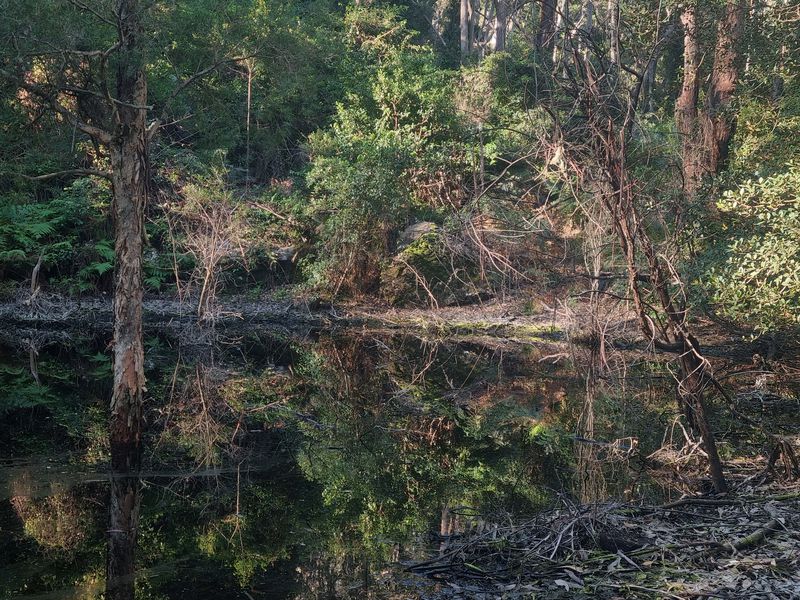
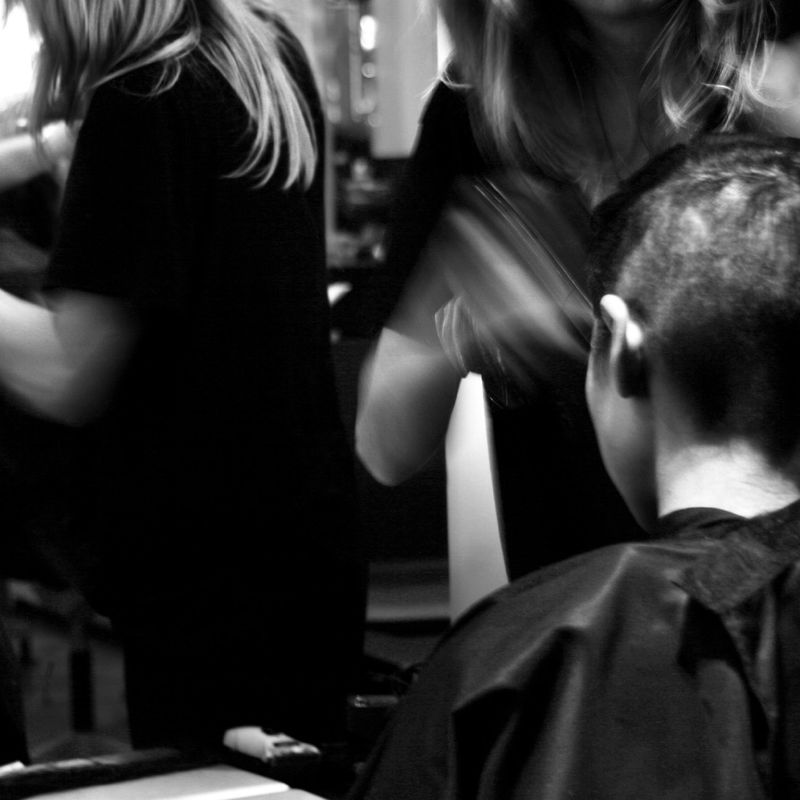
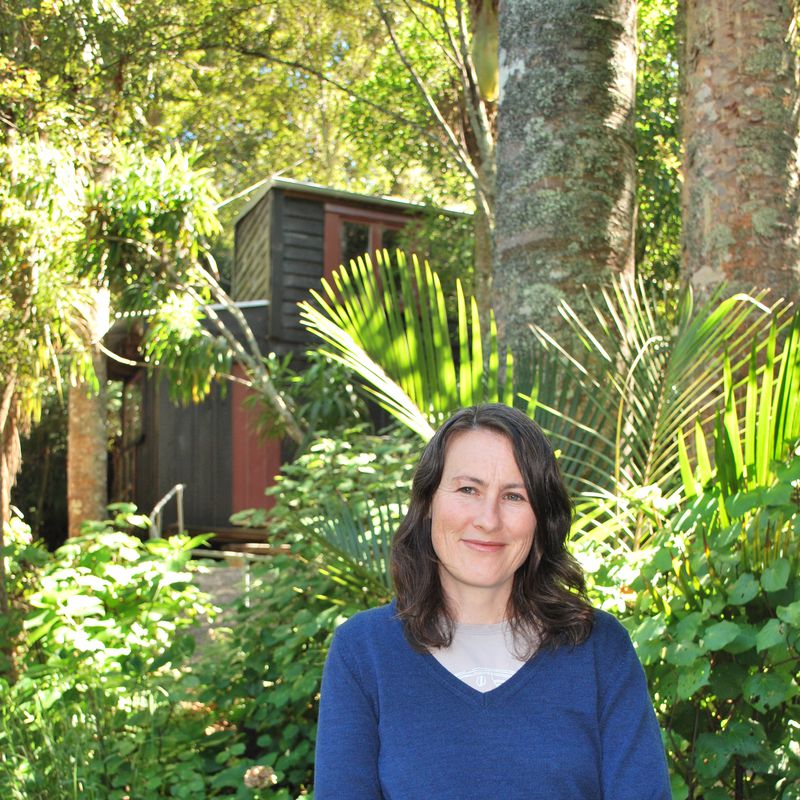
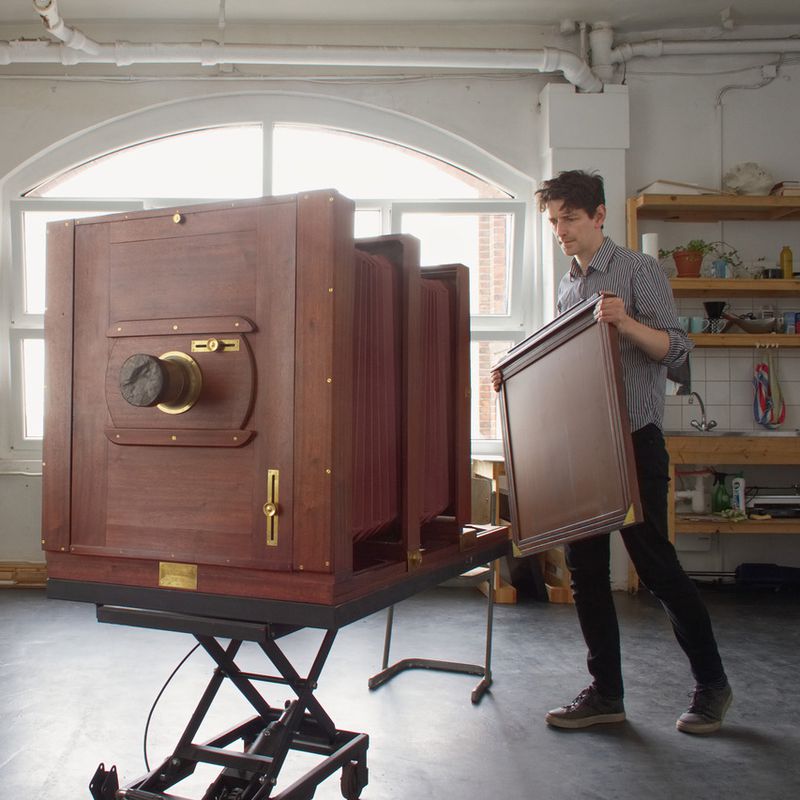
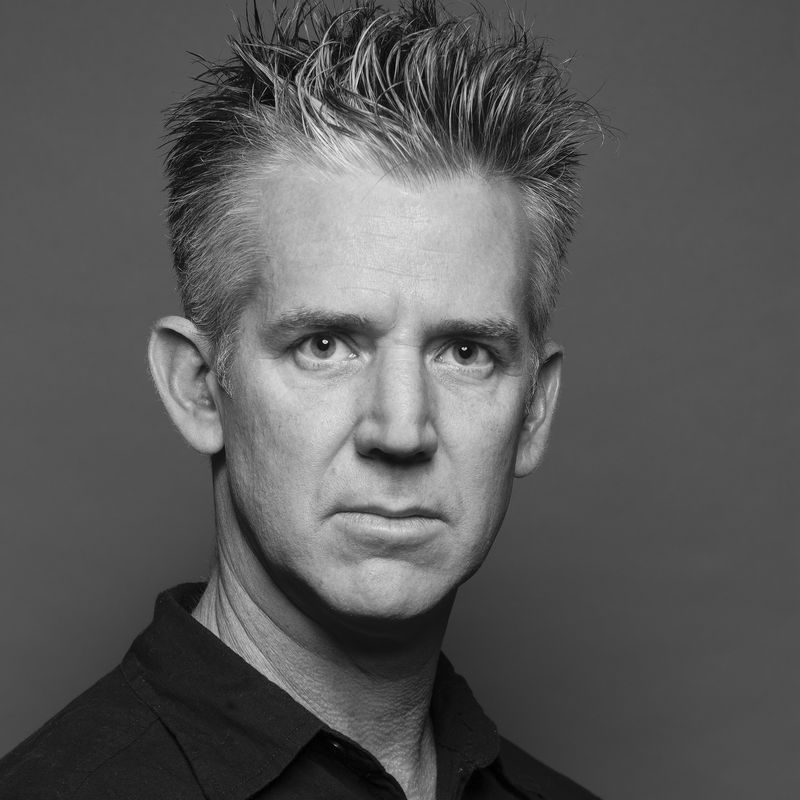
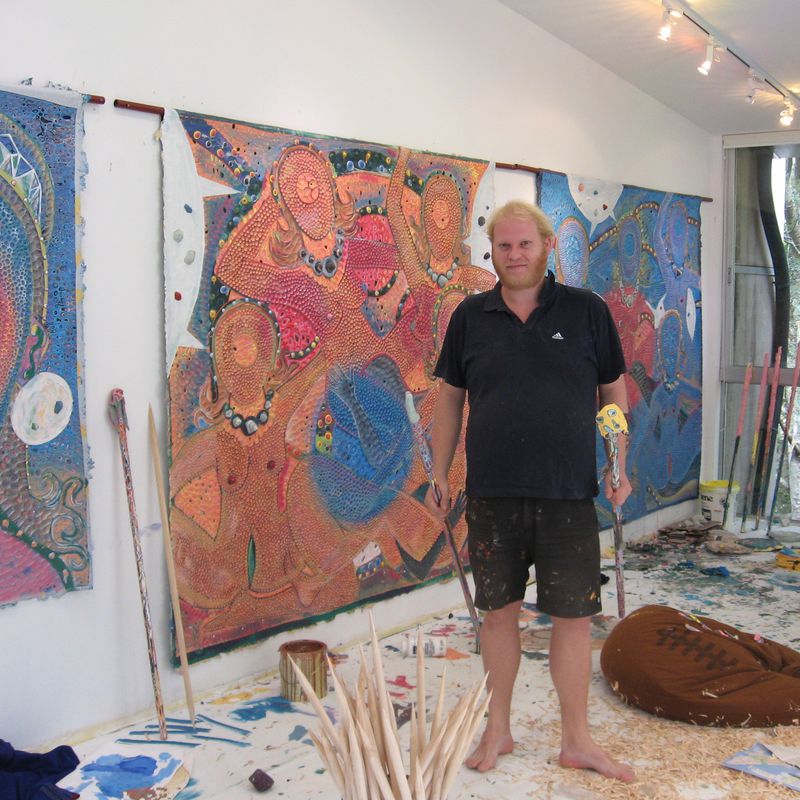
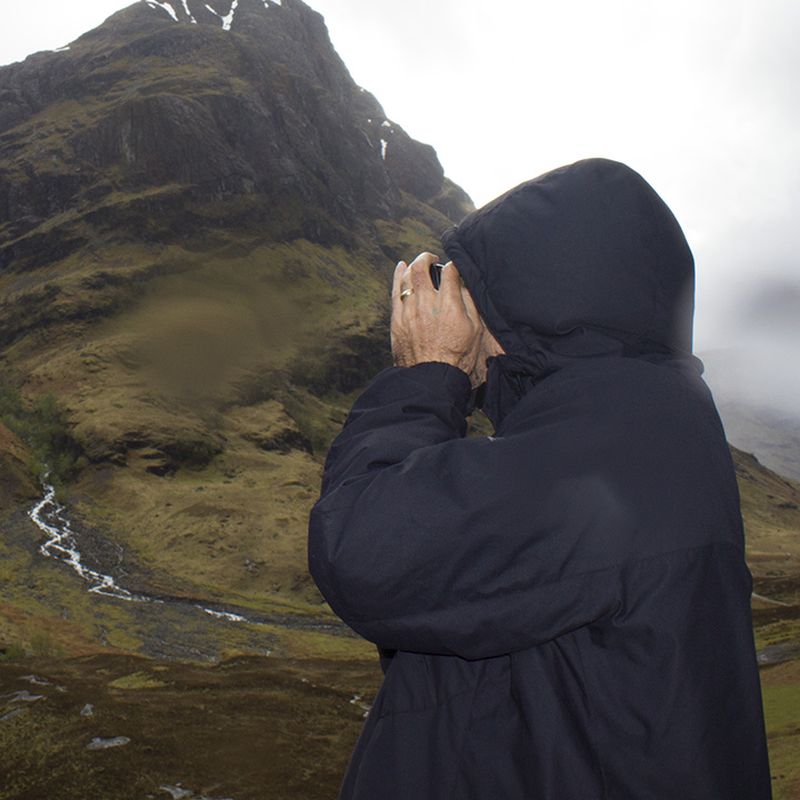
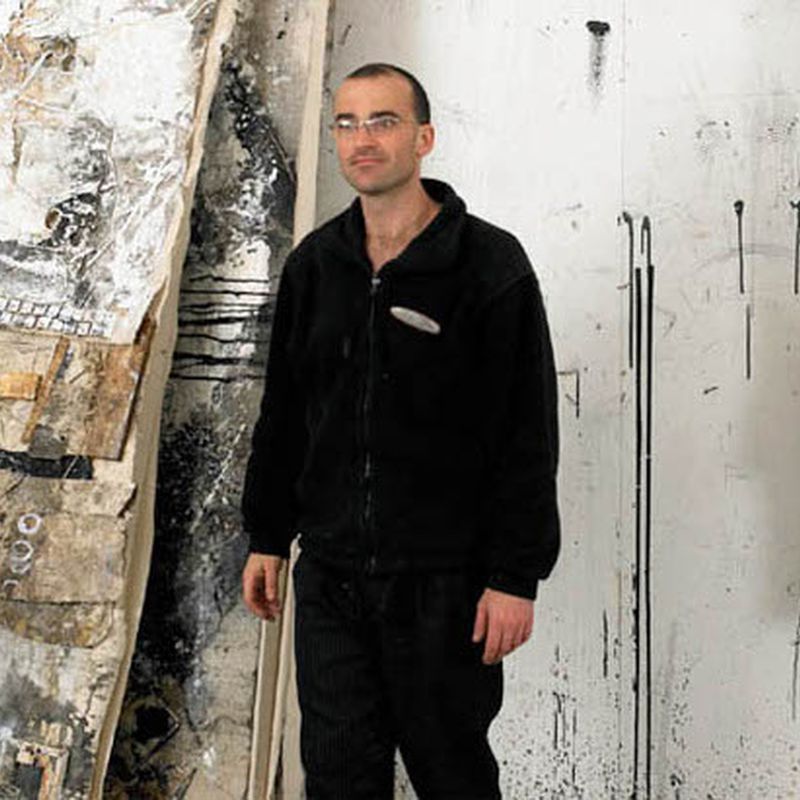
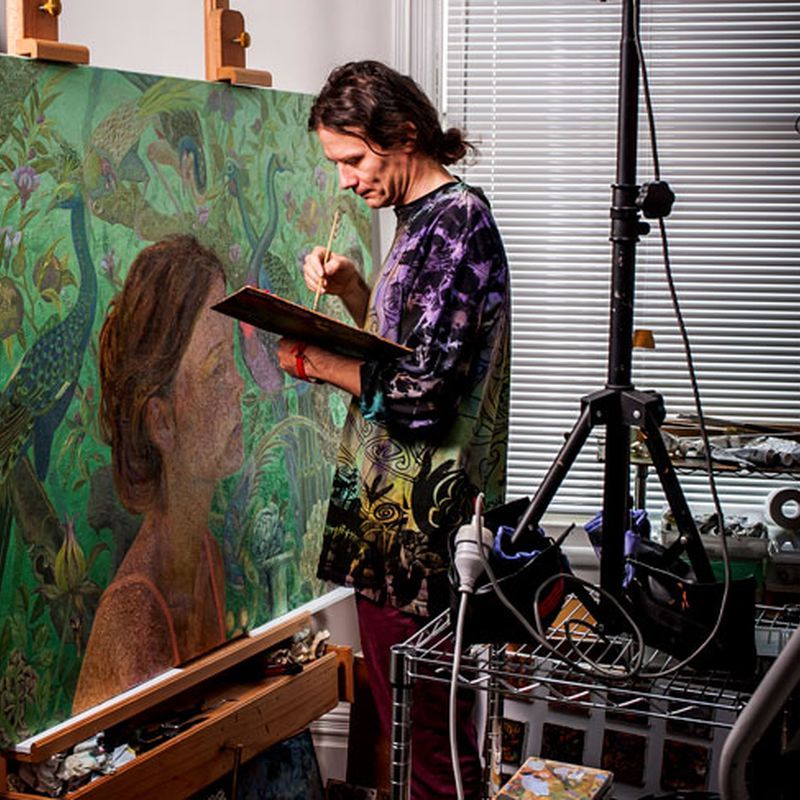
Bundanon, Madison Kelly, 2024
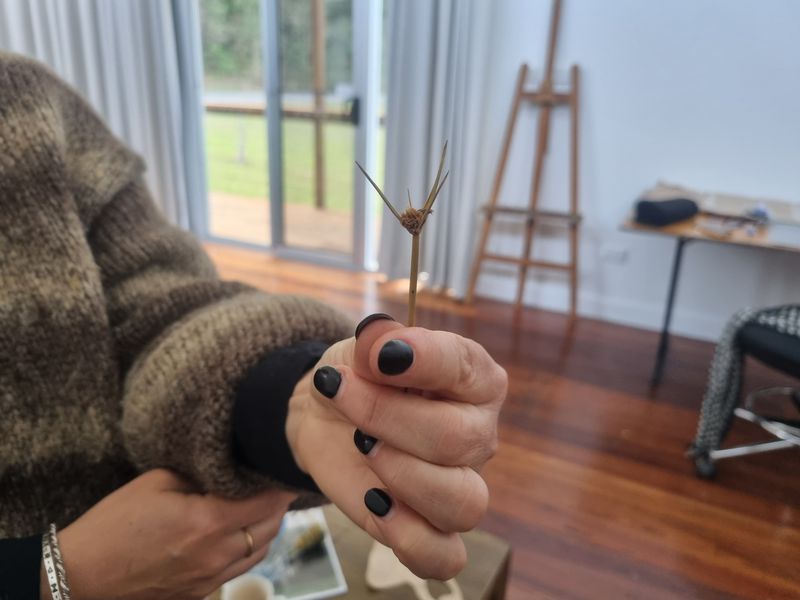
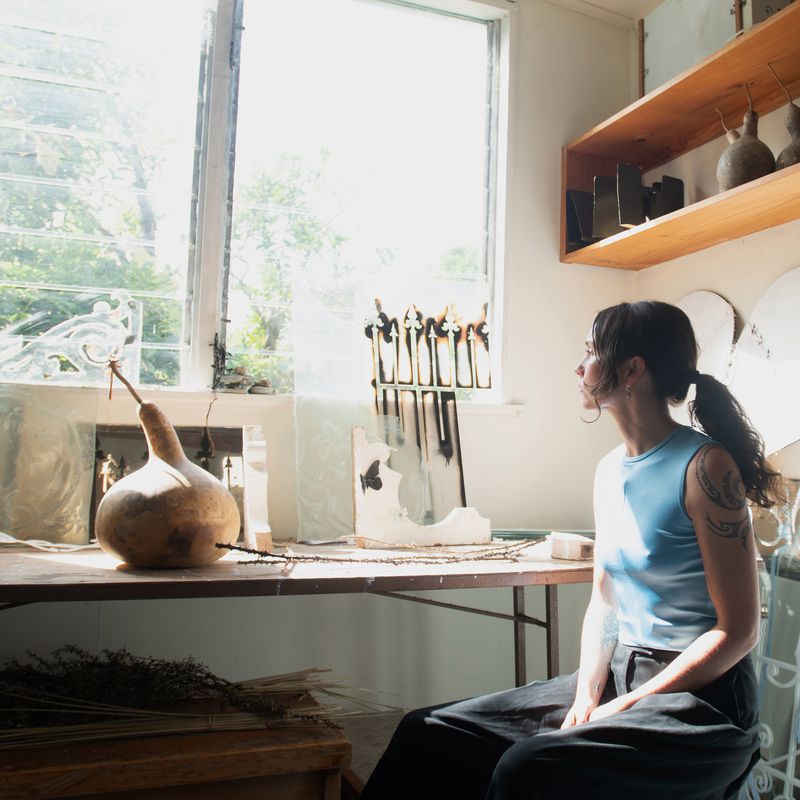
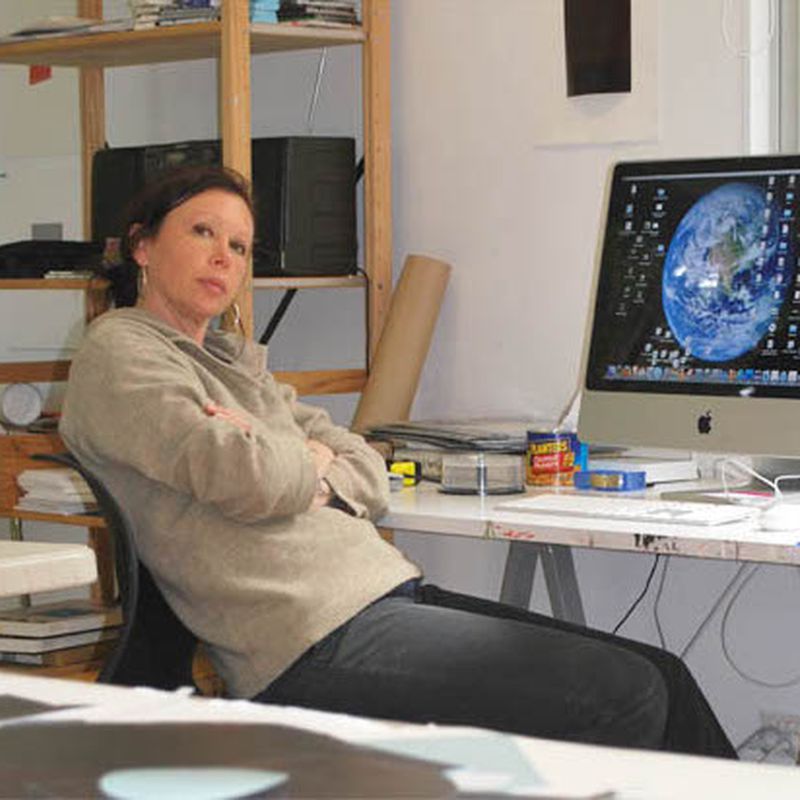
In the studio at Bundanon, Madison Kelly, 2024
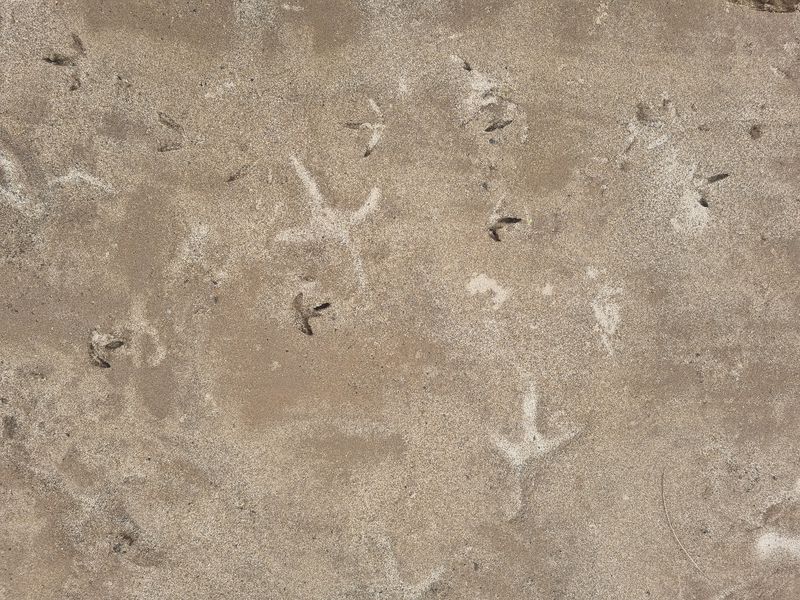
Bundanon site study, Madison Kelly, 2024
What happens when an artist shaped by the forests and waterways of Te Wai Pounamu steps across the Tasman as manuhiri—an Indigenous visitor—on another sovereign land?
For Madison Kelly, the inaugural McCahon House × Bundanon Exchange resident, the experience was less a shift in location than a deep encounter with place, practice, and responsibility.
During their residency, Kelly moved between drawing, sound, walking, and guiding—carrying with them an ecological attentiveness honed over years of working closely with land and water, and meeting a new environment with humility, curiosity, and careful listening.
Their time at Bundanon unfolded through relationships: with country, with other artists, with local knowledge holders, and with unfamiliar species and systems that reshaped their sense of presence. In this conversation, Kelly reflects on entering other Indigenous ecosystems, the role of sound as a portable form of whakapapa, how guiding informs their art-making, and the unexpected intimacy of learning alongside strangers.
What emerges is a portrait of an artist whose practice is inseparable from care—care for land, for process, and for the communities and ecologies that make the work possible. Below is our conversation.
Dina Jezdic
Kia ora Kelly, congratulations on being the inaugural McCahon House × Bundanon Exchange resident and completing your residency. After spending time at Bundanon, what stays with you most vividly from the experience?
Madison Kelly
What sticks with me—and I actually find myself bringing it up almost every couple of weeks when talking to people at work in the forest here—is being on country. Getting to learn the forest in such a different place was incredible. Another thing that really stayed with me was the other artists I met there. There are relationships and conversations that are still ongoing, even over a year later. So, in a really simple way, it’s the people.
DJ
I love that. Before you traveled, you mentioned that your first priority was to experience the completely new territory of doing research internationally as manuhiri—as a visitor on someone else’s whenua. I find that really grounding as a starting point. Could you elaborate on how you prepared yourself—spiritually, mentally, or practically—when stepping into another Indigenous landscape?
MK
In the lead-up to the residency, I spent a lot of time really understanding why my practice exists the way it does here in Te Wai Pounamu. I wanted to be grounded culturally and personally, so I wouldn’t feel too dislocated in a completely different space.
I also wanted to be more aware of what would be different when being on someone else’s land. A lot of my preparation involved looking critically at my own relationship with my work—time in the forest, sculpture, drawing, and recording. I realized that a lot of my field recording and ways of collecting mātauraka have strong support from the community here. Going to someone else’s country, it would mostly be just me.
I thought a lot about what a tikanga for that might look like if you don’t have pūrākau or whakapapa to draw on—what it means to be fully present in someone else’s forest, meeting different species, places, and people with a blank slate. So I focused on grounding myself in specific stories, especially around waterways and poha—stones—because those connect us in a deep-time way between Te Ao Māori and Australia. Birds and trees would be different, but water and stones are cousins across the continents. I went deep into those stories so I’d have something meaningful to offer when I arrived.
When I got to Bundanon, we were introduced to the local flora, their own type of cabbage tree, and their totem, the whale. That was my entry point. I used stories from Te Wai Pounamu as conversation starters. They ended up being really effective—simple, solid anchors in a completely new context. Practically, I also prepared by organizing meetings in advance—talking with the conservation manager and others at Bundanon—so I could learn more about local cultural knowledge, birds, and the land. That combination of grounding in my own stories and some practical preparation gave me a framework to step into the residency with confidence.
DJ
That actually leads nicely into my next question. You took part in the public program for National Science Week, guiding participants through a drawing experience in the local wilderness. What did you observe about how others connected through that activity?
MK
I’m really glad I did that. I had spent quite a bit of time on my own doing independent research, but I kept the workshops in the back of my mind. I actively reflected on which parts of the site had taught me the most so I could guide others through similar exercises. One thing I hadn’t anticipated, and found really interesting, was the difference in relationship to the land between local visitors and someone like me—an international artist or an Indigenous visitor.
At first, the participants expected more of a life drawing class than a field study. They were a bit unsure—“I don’t know how to draw this,” “I can’t do this.” I was asking them to do transit lines, quadrats, and draw all the leaves on the ground, so there was a bit of a learning curve. That tension—artist versus local visitor, and the expectations people had, was really fun to navigate.
By the end of the session, we had much richer conversations about the history of the land, the layers between pasture areas and bush, as we moved from the estate house into the hills and forest. Even though the workshop wasn’t tied to an exhibition, it became a way to explain and establish my practice, particularly at the intersection of science and art. It was also an interesting challenge being a visitor trying to reveal things about a place that locals might take for granted.
Back home in Aotearoa, many participants in my field drawing workshops are already in the arts community and familiar with discussions around colonization and decolonization within their own whenua. Here, we were all strangers, learning about the land together, and finding common ground in how to record and understand it.
DJ
Given your work at Orokonui Eco Sanctuary as a guide (kaiārahi), I’m curious how guiding and art-making overlap for you. Does this residency offer a new perspective on how you hold space for others within your practice? You touched on it a bit earlier—these participants were almost newcomers to your practice, whereas in the past, people often came with some local knowledge or familiarity with art. How did this change things or offer a new perspective?
MK
When I was on my own, I spent a lot of time going out on hīkoi —day and night—drawing, recording, listening, and playing in puddles. A lot of that relied on guiding skills I’ve developed. Guiding, especially in a ngahere or cloud forest like Orokonui, requires openness to the many layers of the environment.
Every walk brings new encounters—different ecological or cultural relationships—that you have to be ready to share with visitors. Having that experience was really integral at Bundanon. It probably took me a week or two to stop feeling like I was intruding in the forest there.
That process was really special. It made me appreciate the familiarity and comfort I have with my whakapapa here in Otago, while also giving me the chance to form a kind of whānau with a completely new land and meet people with their own relationships to it. Without my guiding experience, I think I would have struggled more to approach the forest with the right curiosity and eye for observation. It made me realise how essential skills like forest navigation, communication, and conversation are to my practice.
By the time I returned to Aotearoa, I could see how everything is enmeshed in my practice in a way that previously felt separate. Conversations with Jude Chambers while I was there helped me reflect on how to maintain and nurture these research opportunities, rather than treating them as separate worlds. That process really blew my mind—it wasn’t just letting things wash over me, it was actively engaging, holding space, and participating fully. That made all the difference.
DJ
Your work often involves collaboration with people, species, sound, and place. When you’re working across land and cultures, what does that reciprocity look like for you? You’ve mentioned almost having a language you bring to another space—could you elaborate on that?
MK
At Bundanon, sound became really important. I had just begun being mentored more actively in taonga pūoro, and I was at a tipping point in engaging with oro—sound in a Te Ao Māori sense. I also had a background in musical instrumentation and sonic field recording, which was starting to enter my practice. Sound was something I could bring with me without needing to carry lots of materials, and I could even make instruments while I was there.
I ended up creating rudimentary versions of pūoro from cardboard and other temporary studio materials. Listening and sound became central, especially in relation to other artists on site. It was interesting—back home in wānanga, we’d all know the structure and flow of sound exercises. But at Bundanon, everyone started from the ground up. I spent a lot of time walking, having dinner, and listening to birds. We took microphones into the amphitheatre, a huge rock formation, and even though we barely knew each other, sound became a fast way to find common ground.
I also reflected a lot on the loss of language and sound from that land. It made me conscious of how some lands have lost their language, how certain species’ sounds are absent in places, and the deep relationships between sound, species, and landscape over millions of years. Playing instruments or using voice in different ways became a way to offer something to the place, a gesture of reciprocity where normally you might rely on your own reo. I became aware that what might feel appropriate in a forest in Aotearoa—acknowledging species with a mihi—doesn’t necessarily translate directly elsewhere. The act of offering sound, listening, and sharing became a way to engage respectfully with country and the relationships embedded in it.
DJ
I totally understand. It’s almost another level of self-consciousness—things that feel obvious or comfortable back home, in a familiar tikanga, suddenly feel uncertain. It’s like, you know what you would want to say, but you don’t have the language—so you’re left wondering, “Is this okay?”
MK
Exactly. It was really special to lean much more into listening and making small offerings—little gestures with instruments, often focused on air and breath rather than speech. That became really important for my practice. It connects to the work I’m doing now, which is really about surfaces and recording tohu into those surfaces—the vibrations themselves carry the information. It all becomes part of that feeling of encounter with the land and its presence.
DJ
Honestly, this leads really well into my next question. You’ve spoken before about multi-species whakapapa. How does that idea continue to evolve for you, especially when you’re listening across environments? Has your perspective shifted through the experience of working outside Aotearoa?
MK
Before the residency, I felt really comfortable that the whakapapa closest to me—the one I wanted to serve and respond to—was the focus of my practice. It felt like if I could work within our whenua, make work here, and show it here, I would be completing some point of access for my family. The beautiful expansion of that idea came at Bundanon. I realized the continuity of that multi-species whakapapa extends so far—thinking about ocean currents, rivers, and even gum trees.
I started noticing how gum trees have a presence in Aotearoa now, even though we once had endemic gum species that are no longer here.
Going to Bundanon, I realized I could offer similar ways to observe and engage with the land—ways that are unique to visual art and sensory experience. A small object, a little system, could help people perceive who and what surrounds them, even if they didn’t know the full history. I was surprised by how receptive people were.
I’d make little rattles from pods or simple instruments, and participants would immediately connect, saying things like, “Oh, I was on this side of the forest the other day and I heard this.” The common ground was immediate once there was a simple interface—an art or sound object to bridge understanding. This experience helped me appreciate how broad and interconnected whakapapa is.
Even though it’s a Māori concept, its principles have equivalences that ripple outward across cultures and species. It was humbling and a reality check—how powerful it can be to lean into the process of being a visitor, offering a different lens or form of interaction that reveals relationships people might already know but haven’t experienced in that way.
DJ
It’s interesting—it’s almost like you become the intermediary. Not being of the place can offer an expansive point of view, as you said. You’re listening, interacting, rather than trying to be the loudest voice or asserting dominance, as you might on your own whenua. That shift in mindset—less about taking space and more about attuning—must change how you experience the environment.
MK
Exactly. Going into a residency, your mindset is already different. Even if you could somehow go to Bundanon while still doing your normal day-to-day work, you’d be closed off in certain ways. The residency creates space—attunement, focus, deep reflection—that’s hard to replicate in a regular workspace. You can have proper conversations with other artists over weeks, not just quick check-ins or meetings. That environment allows you to take in something entirely new and reflect on it in real time.
Often, in normal circumstances, experiences might sit with you for years before you have a chance to engage with them properly as an artist or researcher. Some bodies of work can’t exist until years later, when the right context or exhibition arises. But a residency offers a safe, contained space to process, to be in the forest, and to let the experience unfold fully in the moment.
DJ
It’s like a real focus point. The McCahon House × Bundanon Exchange is intended to foster reflection and cross-cultural dialogue. What conversations or exchanges stood out for you while you were there with other artists, scientists, or community members?
MK
Some of the most memorable conversations were with Zena Cumpston. We spent a lot of time talking about prints, footprints, rivers, migration, and navigation—strong analogies that connected our practices. Those discussions continued even after the residency, including in the writing I did for Paemanu Collective for Artlink.
For me, that core level—of Ngāi Tahu narratives around migration and food harvesting—remains central to much of my art-making. Another area that stayed with me was the relationship with kaitiakitaka—guardianship—and conservation. Visiting a place like Bundanon, which has been protected for quite some time, gave me perspective on the challenges of conservation, even in a relatively well-preserved area.
That part of New South Wales is rich in biodiversity, but there are still ongoing struggles. Being able to work within the forest, see the outcomes of conservation, and learn about plants, grasslands, and local ecology was invaluable.
It also made me reflect on how fortunate we are in places like Orokonui, which have had a head start on similar conservation work. Bundanon also highlighted the generosity of hosting artists on-site.
It’s made me rethink arts engagement at Orokonui—how to invite people into a forest and help them understand that their own practice can be a form of caretaking. It’s opened up new possibilities for arts research and practice, and it’s something I’m still reflecting on.
DJ
Cool, and finally, as the first artist to undertake this exchange, what hopes or advice would you offer to the next artist who takes part in it?
MK
It’s hard to know without knowing what their practice is, but what I can say is this: even though I’ve been back to Australia several times since the residency, I haven’t felt anything quite like being on Country at Bundanon. It’s an extraordinary opportunity to meet land—really meet it—without the usual barriers of urban space. The studios and facilities are amazing, and of course you should use them well. But more than anything, be outside. Walk the same track every day if you need to. Sit in the forest.
Let yourself inquire—quietly, personally—about who is around you, ecologically and historically. That would be my number one encouragement. I did a lot of that, and I still wish I’d done more. Hold onto the mindset that it’s a privilege to be on Country.
You’ll get the richest experience when you arrive as manuhiri, with openness and authenticity, ready to work through the process of meeting that whenua. So my advice is simple: be in the forest, and be a good manuhiri.
DJ
I think—I mean, that’s good life advice, to be honest.
MK
People could probably do that anywhere and feel a bit more settled in general.
DJ
I also feel like this residency was just one of those perfect alignments for you. Listening to how you engaged with it, what you took from it, what emerged—it just sounds like everything clicked.
MK
Yeah… from an artist’s perspective, being invited to even be considered for this residency was really special. It was affirming. It helped me realise that people understood that part of my practice—what I’m trying to develop, and what I could gain from an opportunity like that.
It felt really beautiful to have that kind of recognition and support from a community beyond the South Island. And it absolutely set me up with so much more strength. More resilience in my practice, more confidence in how I work. Because as soon as I got there I thought, Okay, I’m ready.
I could immediately apply my relationships with the field—everything from being in environments, to listening deeply, to working with whenua. All of those skills, all that thinking, all that whakaaro found a home there almost instantly.
I don’t think I would’ve learned that in a city, or in a different context. It was such a safe, supportive, lively place to understand the real value of my processes. And I think for Indigenous artists—anyone working ecologically or site-responsively—being in a place like Bundanon, with that kind of support network, reveals so much. I still think about that forest. I still dream about it.