ALUMNI ESSAYS
Writers on alumni artists of our residency programme
A
C
F

G
H
I
J
K
M
P
R
S

T
V
W
Y

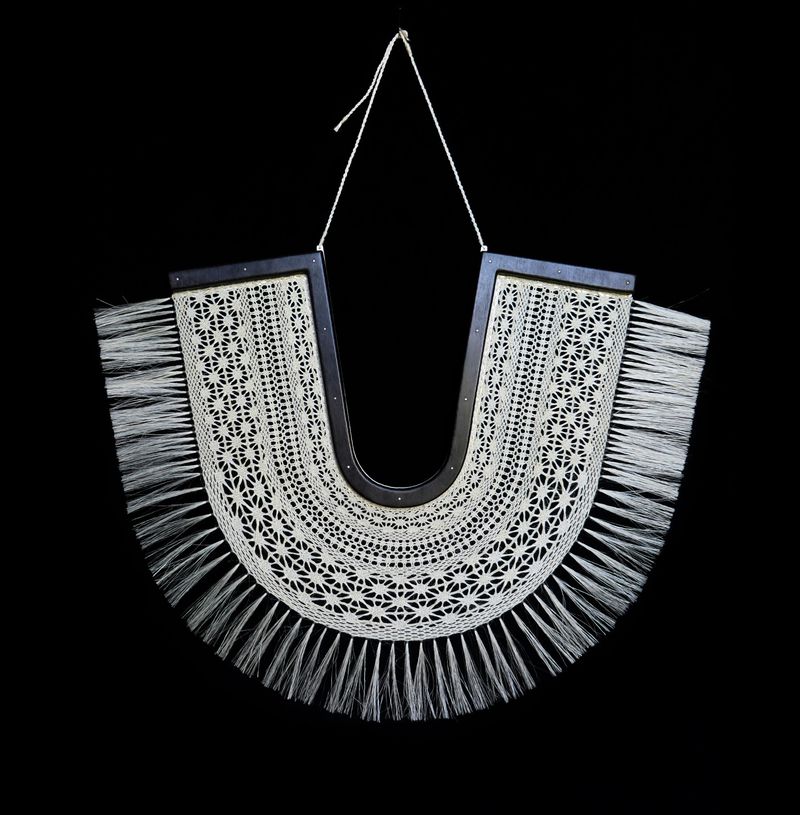
Rowan Panther, A triad of safekeeping, 2021
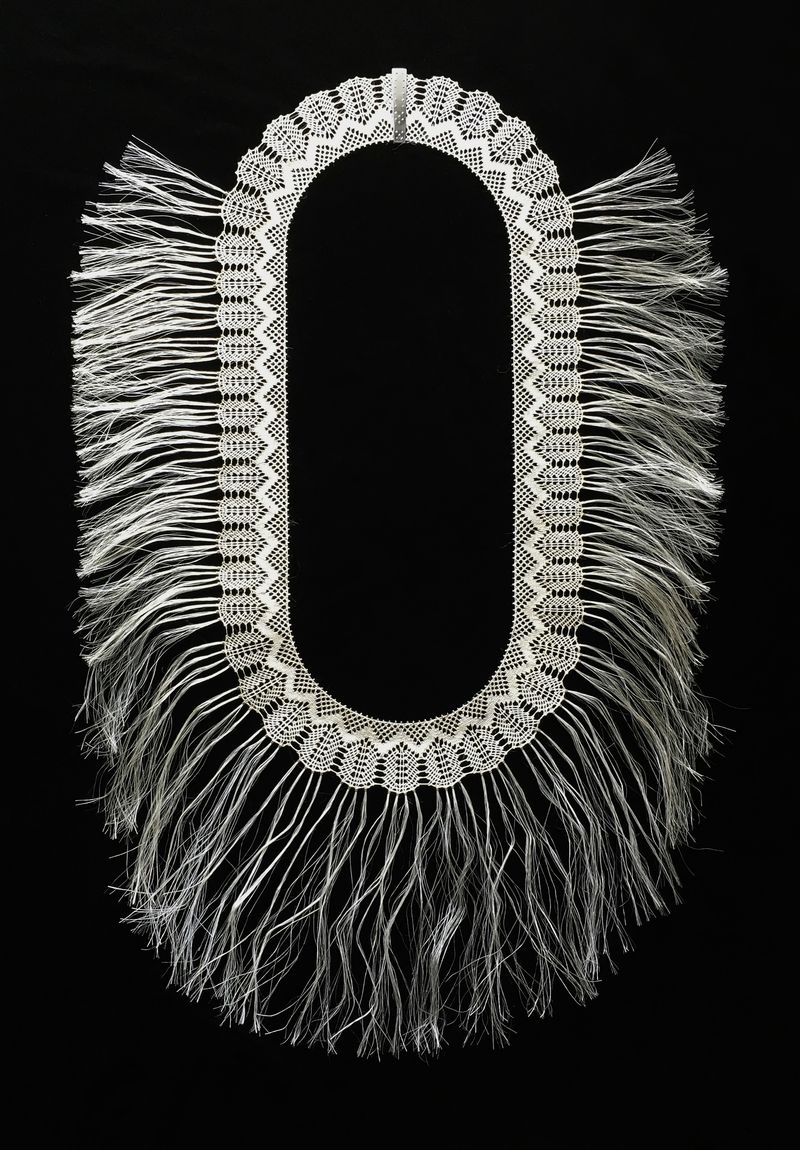
Rowan Panther, Lei #1, Muka, silver, 540x815mm, 2017
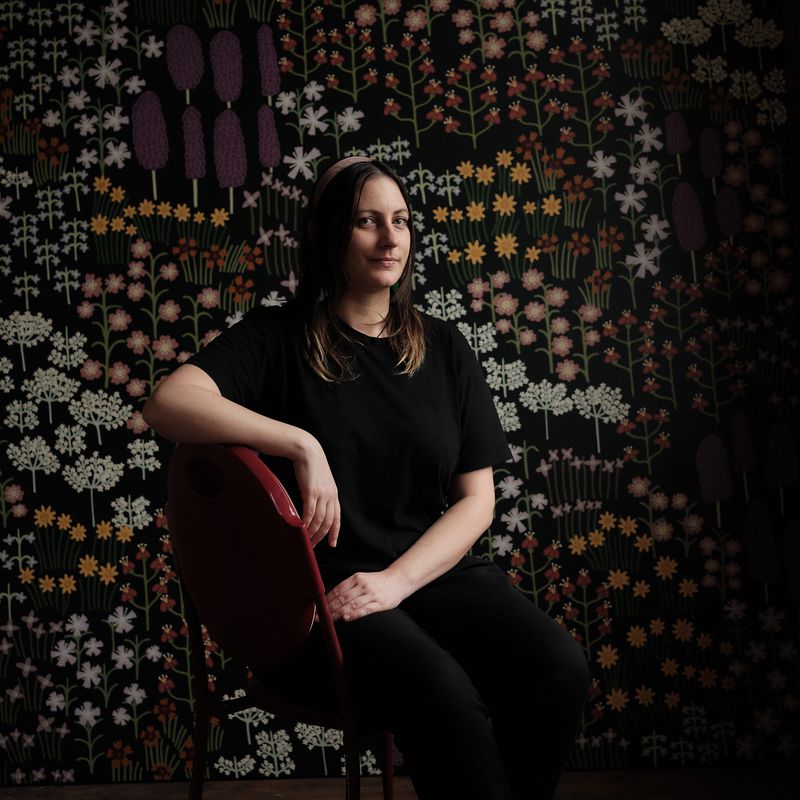
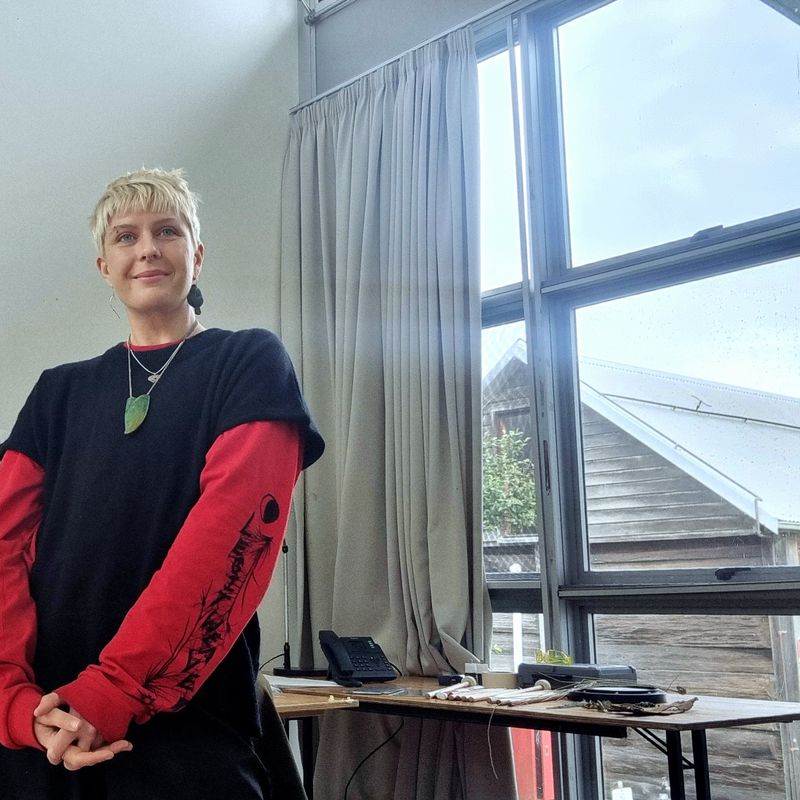
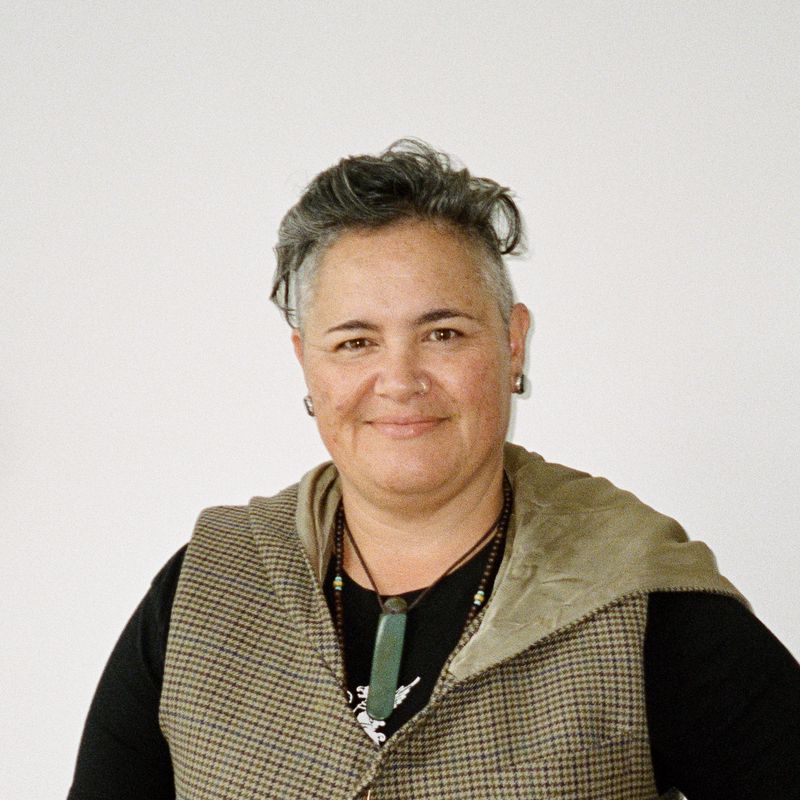
Rowan Panther’s works dwell in the cross-section. Across her practice, Rowan combines the techniques and traditions of European lacemaking with materials and forms grounded in Aotearoa and the Moana. Rather than using the customary linen or cotton threads associated with European lace, Rowan works primarily with muka harvested from harakeke grown in her garden. If lace carries the weight of a European textile history, muka indisputably locates Rowan’s work within Māori material practices and to Aotearoa itself. Geographical references extend again in Rowan’s various choices of hard materials and form, which have at different times included Moana shells, European woods, sterling silver, lei, breastplates, gorgets. Together, these references mirror Rowan’s own hyphenated identity. A Samoan-Irish maker based in Aotearoa, Rowan makes work, in part, to navigate a sense of belonging. Each series dial ups a certain point of whakapapa emphasis. While the combination of geographical markers shift from one work to another, lace is the constant. It consequently functions in Rowan’s work not only as a decorative medium, but also as an architectural structure that can hold diverse material histories in proximity.
Within this matrix of material and whakapapa histories, plant motifs in each work situate these broader cultural entanglements within a specific time and place. In Lei #4, the patterns along the outer edges echo the pointed leaves of frangipani trees and the repeating fans of coconut fronds: plants found across the Moana, particularly in Rarotonga, where Rowan’s grandfather lived. In her 2022 Kohumaru series, Rowan references a traditional lace pattern featuring English plants. Yet oak leaves and roses are replaced with plants found around her Northland home: kauri, kawakawa and pōhuehue.
Rowan recently produced a new work centred on pūhā: a long neckpiece of muka-lace shaped into a single, unconnected stem with branching leaves. The pūhā work, perhaps unexpectedly, emerges from Rowan’s three-month artist residency at McCahon House. Compared with the monumental kauri trees surrounding the house, the humble pūhā seems pretty ordinary. It grows rapidly and abundantly, emerging everywhere from gardens to roadside edges. For many, it is most familiar as a staple ingredient in boil up. Yet pūhā occupies an unstable position within Aotearoa. Though deeply embedded within Māori cuisine and medicinal practices, sow thistle (sonchus oleraceus) is not Indigenous to Aotearoa, having likely arrived by accident through colonial settlement and trade.1 Aotearoa has its own native thistle species — Sonchus kirkii — yet it is the introduced pūhā that circulates most visibly through kitchens, gardens and urban spaces.
Pūhā resists easy classification. It is introduced yet embedded. Ingredient and weed. Naturalised yet still technically invasive. It becomes in Rowan's work a contradictory object. In fact, in depicting it in lace made from muka, its contradiction is heightened. As Rowan notes, it is "a faux native being woven from a real native." 2
Botany itself has long functioned as a system for organising and classifying belonging. In colonial contexts especially, botanical collection, transport and classification became deeply entangled with imperial expansion and Indigenous dispossession. The very language of botany — native, introduced, invasive, naturalised — carries uncomfortable parallels to people. The word “diaspora” itself shares these botanical roots, deriving from the Greek speirein (“to scatter seeds”). Long before it described the movement of people, it described the dispersal of plants.
It’s tempting—but dangerous—to extend the botanic metaphor too far into a sense of human belonging to place. It very quickly devolves. Fortunately, Rowan’s interest in the pūhā leans not towards categorical certainty, but when those taxonomies fail. Or rather, moments when a material exceeds the fixed categories available.
When multiple meanings coincide, it seems Rowan constantly returns to lace. Rowan’s obsession with lace stems, in part, from its textile histories. Specifically, Rowan is interested in the repeated appearance of lace in the turning points of other technologies and disciplines. One early example appears in the experiments of William Henry Fox Talbot. Talbot is commonly credited as one of the inventors of photography. Working with light-sensitive, salted paper, he produced contact prints by placing objects directly onto the paper’s surface during exposure. Lace frequently appeared in these experiments because of its intricate structure and ability to lie relatively flat. In Talbot’s The Pencil of Nature, “Plate XX. Lace” demonstrated photography’s capacity to produce multiple positive images from a single negative. Lace consequently played a starring role in the development of photographic reproduction processes. So too, it turns out, did botany. Flora offered many of the same physical qualities as lace: clear outlines, different levels of translucency and a certain aptitude to be pressed and laid flat.
Rowan’s biography echoes some of this media crossover. Rowan initially studied photography. It was only in her final year of a fine arts degree at Elam that she began attending lacemaking classes in the community centre under the renowned Alwynne Crowsen. Rowan’s McCahon House residency was very obviously a return to the site of her lace beginnings. But Rowan took it further, returning to the historical meeting of lace and photography. In addition to a pūhā neckpiece, Rowan also made a salt contact print featuring a stem of pūhā rendered in lace made from muka.
As photographic processes evolved, contact printing today is associated not with reproduction, but with indexicality. Contact printing produces images through direct, physical touch: object pressed against surface, surface exposed to light. Yet Rowan’s image simultaneously stages contact and distance. The pūhā has already undergone multiple translations—from plant to lace, lace to photograph. Migration occurs not only across geography, but media too.
Across Rowan’s practice, lace becomes a structure for holding unstable and overlapping histories in proximity. European textile traditions, Māori fibre practices, botanical classification, migration and photographic reproduction are neither collapsed into one another nor cleanly separated. Instead, Rowan’s works sustain and suspend their contradictions. Lace, with its interlaced openings, tensions and connections, becomes an architecture capable of holding together different strands. That sense of diasporic belonging remains unresolved, but the textiles Rowan creates are all the more resilient for the twisting, crossing and knotting of her many cultural histories.
[1] For a short overview of pūhā’s historical uses in te ao Māori, see the entry on Ngā Rauropi Whakaoranga: https://rauropiwhakaoranga.landcareresearch.co.nz/names/419d58d5-9ced-46d3-9f6a-e1d5e0645257.
[2] Kate Evans, ‘The Lacemaker: In the studio with textile artist Rowan Panther’, New Zealand Geographic, March 2026, https://www.nzgeo.com/stories/the-lacemaker/.