ALUMNI ESSAYS
Writers on alumni artists of our residency programme
A
C
F
G
H
I
J
K
M
P
R
S
T
V
W
Y
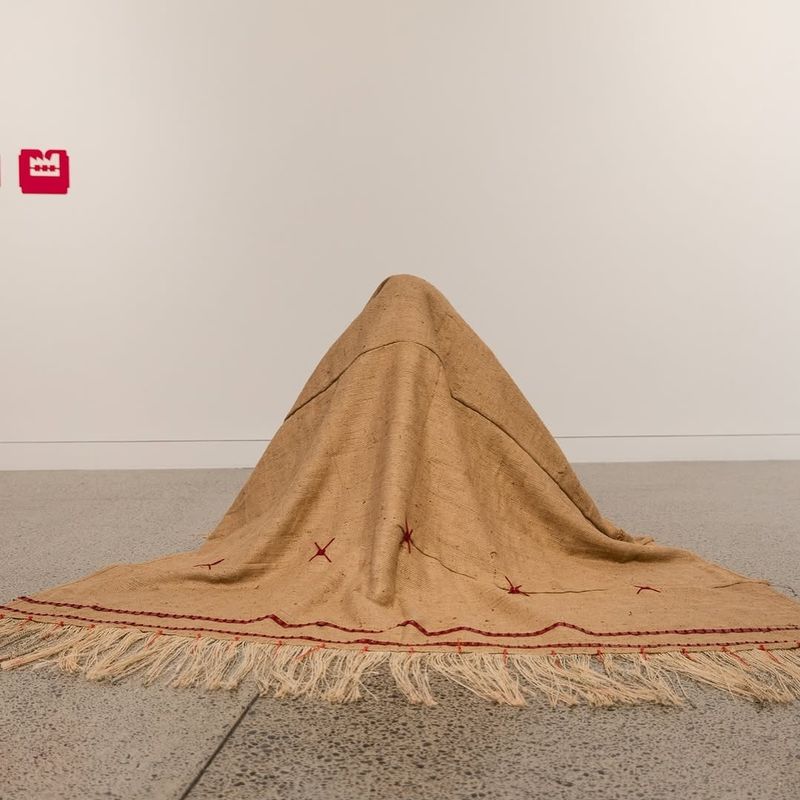
Sackcloth and Ashes, 2024, hessian sacking, wool, cable ties Photo courtesy @lilianrosemartirez
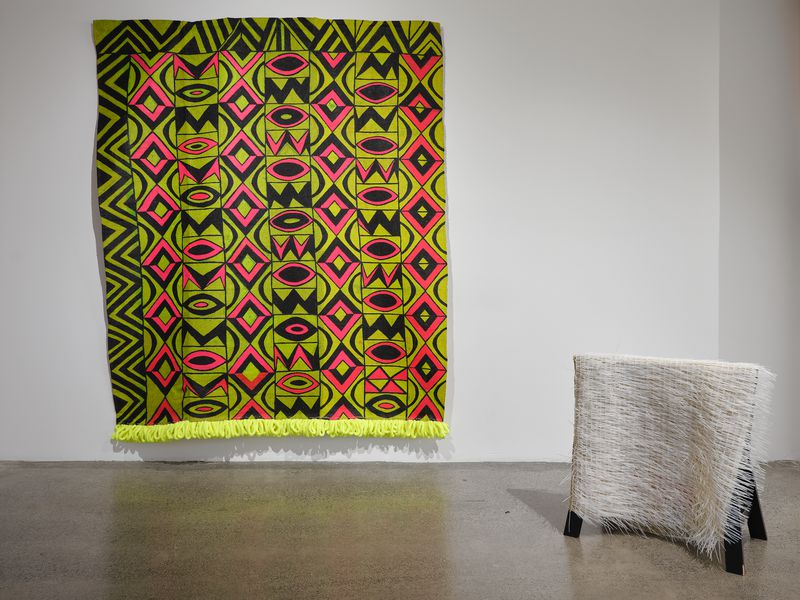
high vis-low vis, 2026, hessian, acrylic paint, chenille yarn & ’ie sina, 2026, bleached hessian, cable ties, photo by Sam Hartnett
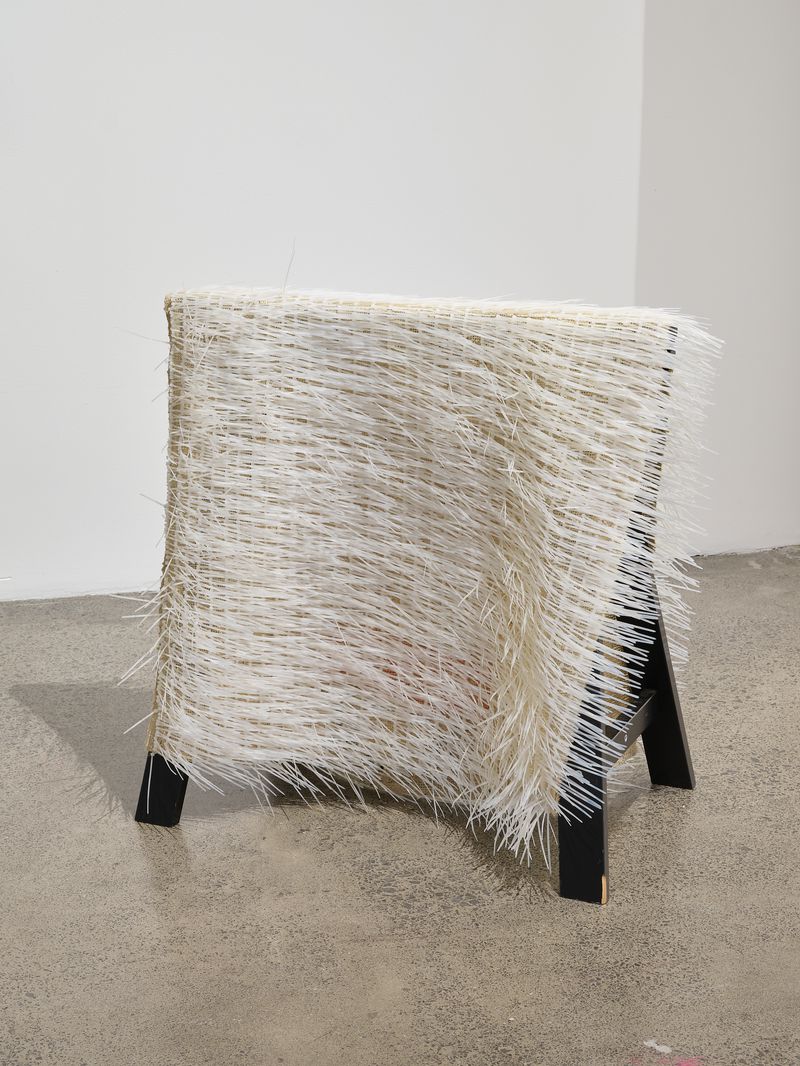
’ie sina, 2026, bleached hessian, cable ties, photo by Sam Hartnett
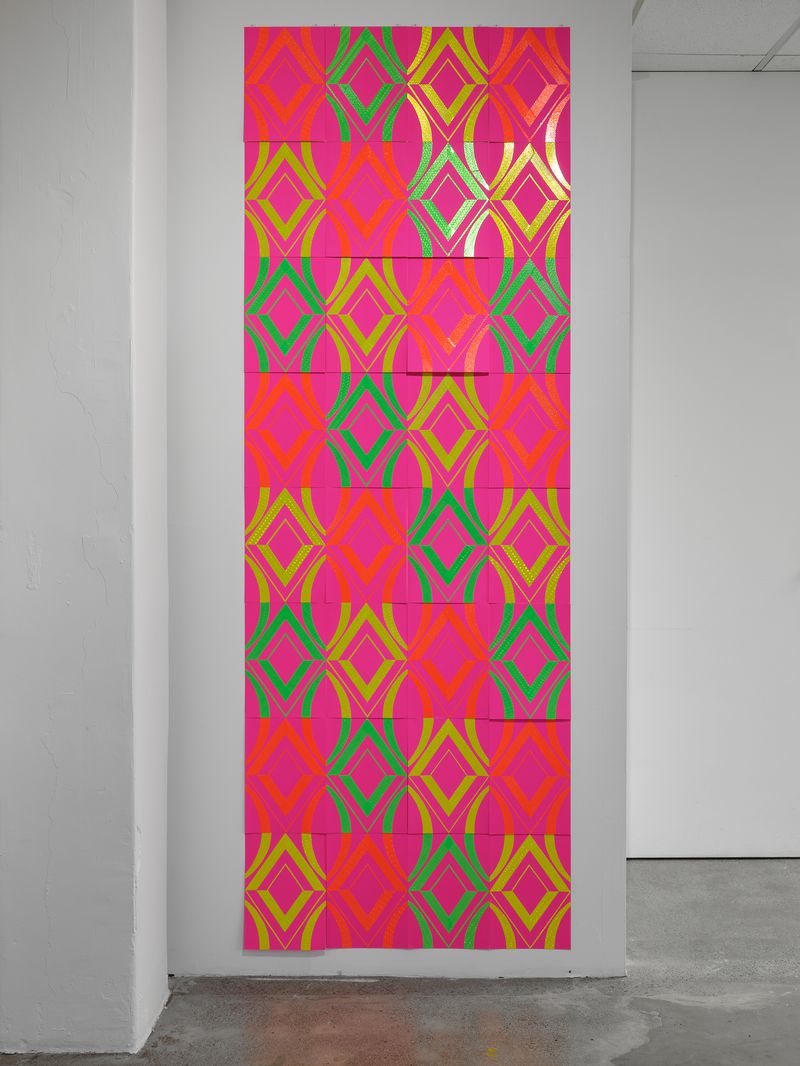
invisible, 2026, reflective tape, card, photo by Sam Hartnett
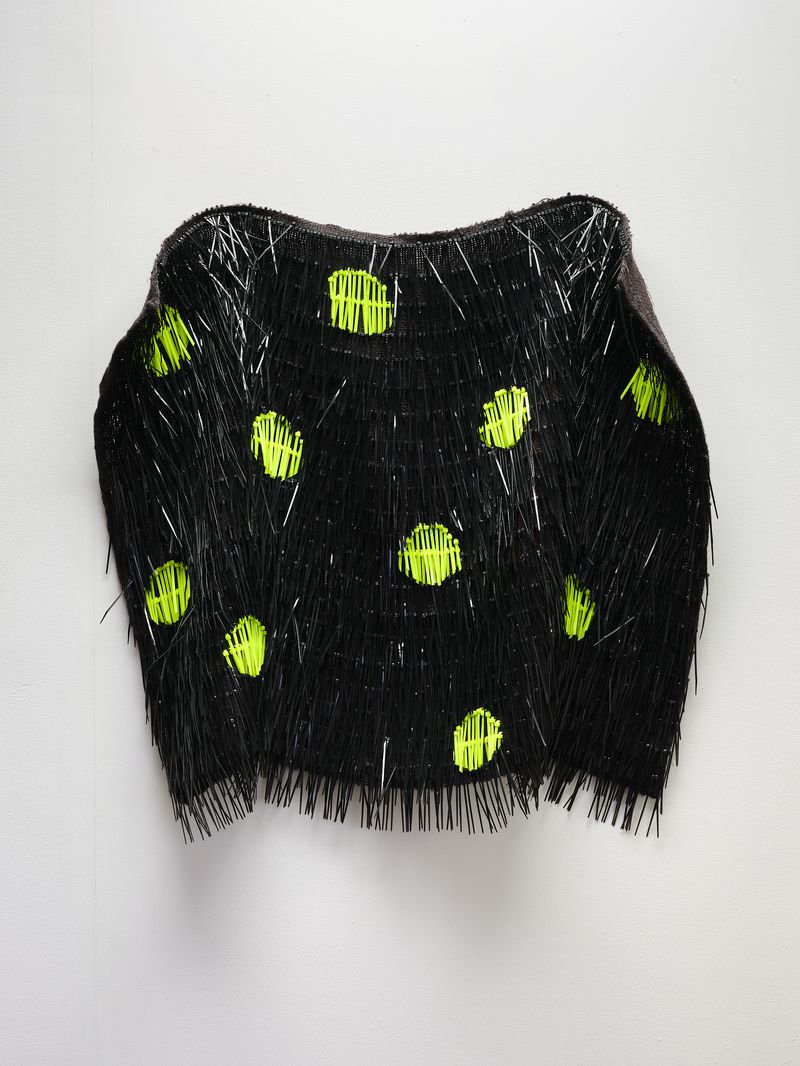
siapo uliuli, 2026, hand-dyed hessian, cable ties, photo by Sam Hartnett
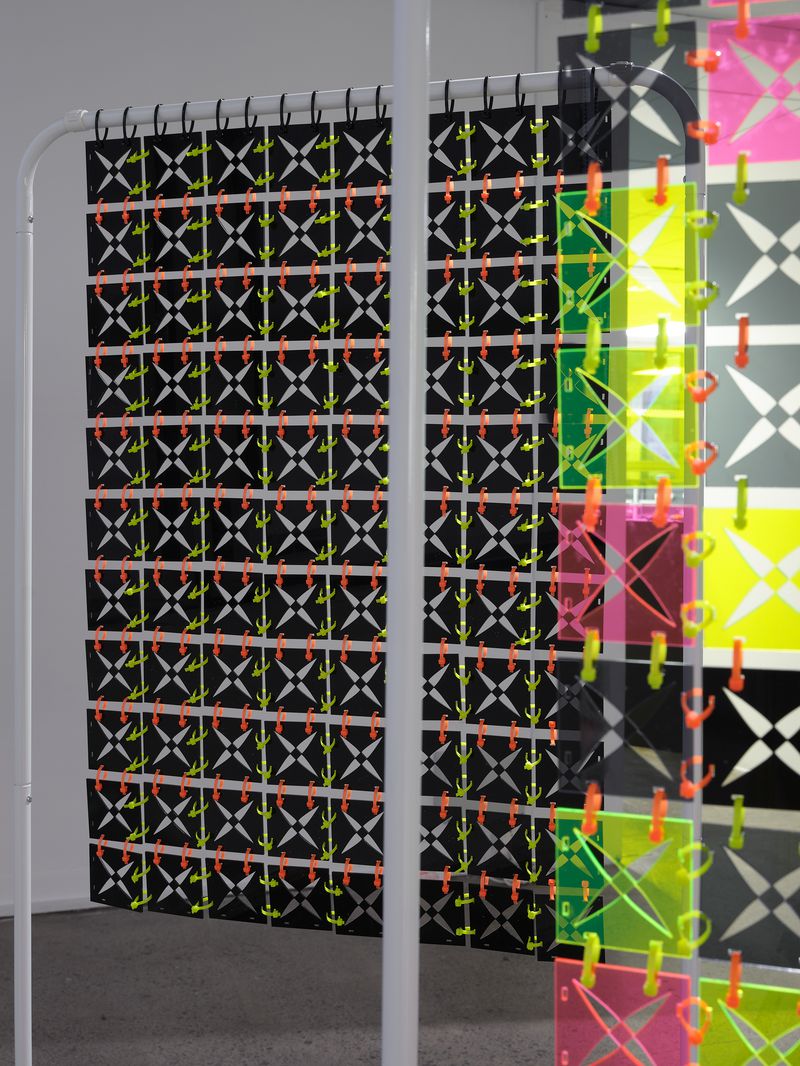
(in foreground) gardenia fluro, 2026, laser cut acrylic, cable ties and (in background) gardenia black, 2026, laser cut acrylic, cable ties, photo by Sam Hartnett
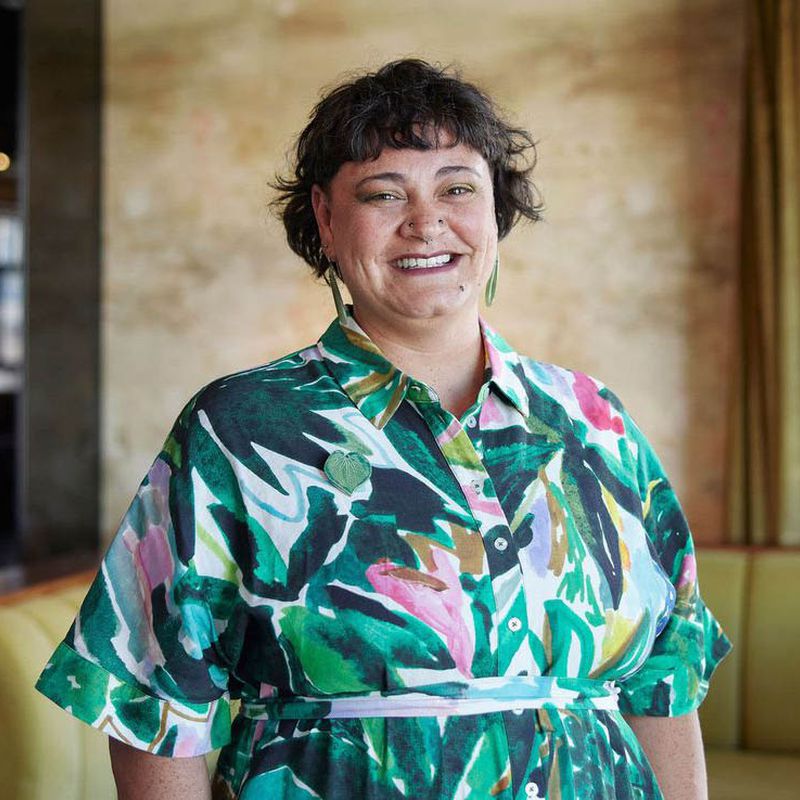
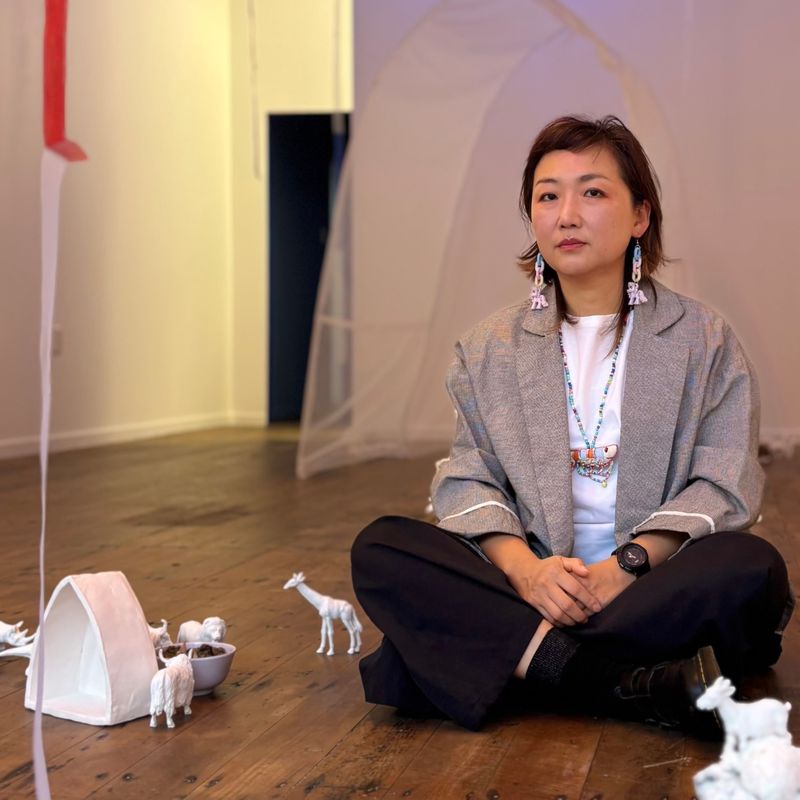
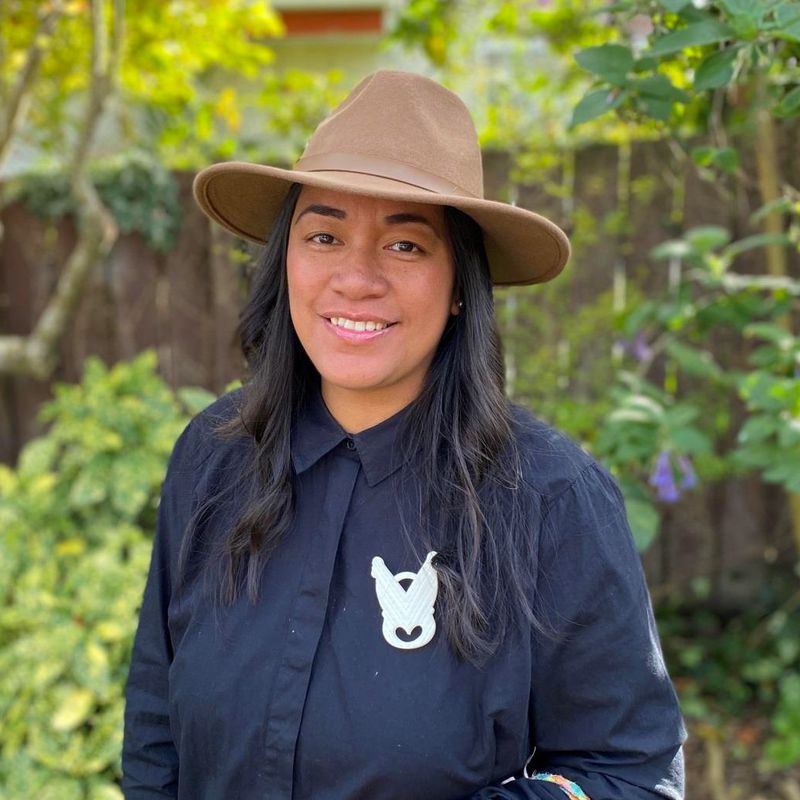
Linda Va'aelua arrived at Parehuia ready to work. By the time she began her three-month tenure as the Creative New Zealand–McCahon House Pacific Artist in Residence, her practice had already gathered considerable momentum. What the residency offered was the one resource contemporary artists rarely have enough of: uninterrupted time. Time to deepen research, test ideas, allow knowledge exchange and ambitious directions to unfold without the constant negotiations of everyday life. The result is an expansive new body of work that connects her Samoan and Scottish gafa through a response to museum collections, colonial histories, migration and diasporic identity.
The residency's emphasis on Moana—fostering connections across Aotearoa, Oceania and globally—and vā—the relational space between people, communities and places— reflects the foundations of her practice. Relationships shape the questions she asks, the collections she seeks out and the people she chooses to learn alongside.
Throughout our conversation, ideas rarely arrived fully formed. Instead, they emerged through stories of conversations, introductions and unexpected encounters. Again and again, Va'aelua returned to the importance of remaining open: allowing ideas to unfold, recognising unexpected connections when they appear, and trusting them enough to follow where they lead.
Your pathway into contemporary art has been shaped by a range of experiences, from graphic design to family, migration and now your studio practice. Can you tell me more about the path that brought you to Parehuia?
I’ve come to my practice later in life. My background is in graphic design. I studied visual communication, and my first job was in publishing, working on magazines, which was really fun and very creative.
Then life happened. I got married, had children, and we lived overseas. We were in Manila for almost nine years, and during that time my focus was raising the kids and supporting my husband’s career. That period was really about family.
When we moved back to New Zealand, I started doing some freelance design again and trying to get my creative brain working. Around that time, a friend (Qiane Matata-Sipu) was developing Nuku, the book celebrating 100 Indigenous women, and I worked on the branding and design for that project. That really reignited something for me.
My husband was actually the person encouraging me to look more seriously at painting, and he started buying canvases and putting them away until I was ready.
It was around COVID, and after the sudden death of my dad, that I had a go. That was really the beginning. I realised that graphic design wasn’t where I wanted to be anymore. I didn’t want to work for clients and design according to someone else’s vision. I wanted to fully explore my own practice.
A lot of those design principles have naturally carried through into my work. People often comment on my sense of balance, composition and colour, and I think that comes from my graphic design background.
I am often described as a Pacific artist because of my Samoan heritage, and much of my work explores that identity. But my perspective is distinctly diasporic. I was raised in New Zealand, not Samoa, so my work begins with questions of identity: Who am I? Where do I belong? And how do I communicate that visually?
What did the three months at Parehuia offer you that your usual working rhythm does not?
For me, it was the dedicated, uninterrupted time.
I am quite fortunate that I have a studio at home, but my reality is that I work around family life. I work during school hours, then there are school pickups, activities, dinner, everything else. Once that starts, I close the studio.
The residency gave me the opportunity to focus without that constant negotiation. My husband and I had to work out how we could make it happen because he had to take on more of the responsibilities at home, but we decided that this was an important opportunity.
To have that time and space where you can just focus on your mahi is incredibly valuable.
The residency was designed to foster connections across Aotearoa, Oceania and globally. How do you see your work sitting within those wider conversations?
I think within New Zealand, people see me as a Pacific artist because of my Samoan heritage. But outside of New Zealand, I think that diaspora identity becomes much more apparent.
That is why I think the idea of Oceania is powerful because it allows for connection without flattening those differences. It acknowledges relationships between people and places rather than trying to put everyone into a single category.
The residency has involved many conversations and exchanges. Was there a moment that shifted or sharpened your thinking?
There have been so many conversations, and sometimes it has felt overwhelming — but in a good way.
Jude (Chambers) has been really supportive, making sure the balance was right, and always reminding me that all these threads will eventually come together.
What I have appreciated is that the conversations have been led by me and my thinking: who do I want to speak with? Who might challenge me or bring something that I need?
One of the most valuable conversations was with Ruth Buchanan. We were talking about international strategy, and she said: “Go where the work leads you.”
That really stayed with me.
She wasn’t saying don’t be ambitious. She was saying don’t scatter yourself everywhere just because there might be an opportunity. Follow the places where there is genuine interest and connection.
That actually felt quite natural to me because most of my opportunities have come through relationships, introductions and conversations. They haven’t necessarily come from a very calculated strategy.
Has there been a new international relationship formed through Parehuia that you see continuing beyond the residency?
Definitely. One of the most valuable new connections has been with Ruth McDougall and Ruha Fifita at QAGOMA.
We had an online studio visit with Jude Chambers and the curators, which was an opportunity to learn more about the Asia Pacific Triennial and begin building a relationship. There wasn't an agenda beyond getting to know one another, but it became a really generous conversation about our respective practices and interests.
That relationship has already opened new possibilities. Ruth and Ruha have invited us to join part of the programme around an Indigenous Canadian delegation visiting Australia later this year, which has created another opportunity to continue those conversations in person.
I don't have many connections in Australia, so I'm excited to keep building that relationship and to see where it leads.
Your research during the residency has involved museum collections and measina held overseas. What has that engagement offered your practice?
That has been one of the most beautiful parts.
Through relationships, I was introduced to Ali Clark at National Museums Scotland. She immediately welcomed me to view their Samoan collections and invited me to explore the measina.
When I visited Scotland, I was able to spend time with these incredible pieces and see patterns and forms I had never encountered before.
The work I have been developing during the residency has responded directly to that experience. I was particularly interested in objects connected to Robert Louis Stevenson’s home in Samoa and the histories they carry.
My relationship with the museum (National Museums Scotland) didn’t begin with an expectation of acquisition. It began with generosity and conversation. Later, Ali told me she was interested in acquiring my work Sackcloth and Ashes 3 for their Oceania collection. That was such a meaningful moment because it came from that relationship.
She also said something that really stayed with me. She said she wasn’t interested in the practice of museums just hoarding things. When works enter the collection, they should eventually be seen and engaged with.
That was really refreshing.
Parehuia has a significant place within Aotearoa’s visual arts history. How have you navigated entering that space as the inaugural Pacific artist resident?
For me, the most important thing has been staying true to what I do.
This residency reminded me that I don’t need permission from other people to believe in my own practice.
What do you hope people take away from your journey?
Probably that it is never too late to start.
My journey hasn’t been the usual one where you study, graduate and immediately become an artist. Becoming an artist later in life doesn’t always make sense to other people.
But I think the message is: just try. Don’t be limited by other people’s opinions. Make work that you believe in. Keep pushing yourself and keep exploring.
What advice would you give to future Pacific artists entering this residency?
Be open.
Be open to meeting people you might not expect to connect with. Sometimes you think, “I don’t know if there is commonality there,” but then you have a conversation and discover something valuable.
You can learn from everyone.
What comes next?
I’m travelling to Scotland for a group exhibition at Scott Lawrie Gallery with Serene Hodgman, Jimmy Ma’ia’i and Gary $ilipa. The residency has changed how I think about that trip because I want to approach it as research as well as an exhibition opportunity.
I want to maximise the time there, visit collections, continue conversations and see where the work leads.
The work will continue to evolve. I think that has been the biggest lesson of Parehuia: don’t force everything into a plan. Stay open and allow the relationships and the work to guide you.